"Dame dame dame, que te voy a dar ... una guayabita de mi guayabal."

10.08.2009

AFRODES USA Strongly Condemns Armed Groups’ Violations of Afro-Colombian Rights and International Humanitarian Law Violations in Timbiquí (Cauca)

AFRODES USA condemns the violent actions committed by the guerrilla groups against civilians in Timbiquí (Cauca) on October 2nd. It also condemns the indiscriminate use of force applied by members of the Infantry of the Marines that resulted in injuries of civilians in living in these communities. AFRODES USA wishes to remind all of the parties to the internal armed conflict that these actions armed groups currently based in Cauca that these actions violate international humanitarian law. According to theGeneva Conventions, combatants must distinguish between combatants and “to limit and avoid human suffering during the times of armed conflict” (Article 3). Also the Colombian armed forces that they are obliged to protect the rights of Afro-Colombian civilians living in this area. We remind the Colombian government that placing military bases in the community centers utilized by the civilian populations, as is the case in Timbiqui, is a violation of Condition F, the human rights condition pertaining to Afro-Colombian and indigenous communities of the foreign appropriations act of the United States.

Given the above, AFRODES USA:

-Demands that the Colombian authorities respect and apply IHL and the human rights of the Afro-Colombian communities. They should take steps to ensure the following:

  • Recognition of the existence of an internal armed conflict in Colombia, the persistence of illegal armed groups (both paramilitary and guerrilla) operating in areas of the country inhabited by Afro-Colombians. Recognition of the problem is required in order to implement the legitimate demands of these communities for protection and respect of their fundamental rights. If the State does not recognize the problem then it cannot provide the adequate solution to the problem.
  • Dismantle military bases that violate IHL. For example, move the current military installations that are located near Afro-Colombian civilian settlements (town centers, riverbanks near houses and schools, farms, etc) that endanger the lives of civilians including women and children. Violations of this IHL principle lead to civilians being caught in the crossfire between the warring groups and to their deaths, physical injury and internal displacement.
  • Implement Colombian Constitutional Court Order 005 of 2009, which orders Colombian officials to take a number of steps to protect Afro-Colombian communities at high risk of displacement and to protect the rights of those already internally displaced.
  • Increase its political will to take steps towards a politically negotiated settlement to the internal armed conflict that is having devastating consequences for Afro-Colombian and indigenous communities.

-Demands that the guerrilla groups respect Afro-Colombian communities’ territorial rights and respect IHL. They should:

  • Cease and refrain from engaging in violent activities against civilian Afro-Colombian persons, community leaders and their organizations, goods and services.
  • Refrain from engaging violent activity in city centers and areas inhabited by Afro-Colombians.

-Urges civil society and the international community to take steps to ensure the following:

  • Denounce violent acts that convert communities into human shields, such as the latest actions in Timbiqui.
  • Demand the removal of all military bases from areas in close proximity to civilians, such as town centers, riverbanks, zones of cultivation, etc.
  • Advocate a for a peaceful resolution to Colombia’s internal armed conflict, which is now concentrated in areas populated by Afro-Colombians and indigenous communities, and is the underlying cause of the worst humanitarian crisis in the hemisphere.

In solidarity with the community of Timbiqui.

Respectfully yours,

AFRODES USA

For more information, please contact Charo Mina Rojas at (434) 760-0663 or Marino Córdoba (240) 350-2903

10.06.2009

*Two Post-Doctoral Fellowships in Music at Columbia University *

The Department of Music at Columbia University is pleased to announce two
Mellon Post-Doctoral Fellowships, to begin in September 2010. We seek
scholars or composers in the early stages of their academic careers
(with doctorates received after June 30, 2007 or with all requirements
completed by June 30, 2010) whose research, creative work, and teaching will
add to the intellectual vigor and diversity of musical life at Columbia. In
each semester of a two-year appointment, a Fellow will teach one course. At
least three of these four courses will be in Columbia's Core Curriculum:
either Music Humanities (Masterpieces of Western Music) or a comparable
course in Major Cultures (such as Asian Music Humanities). A fourth course
may be on a subject chosen by the Fellow, in consultation with the
Department. (For information about the
Core Curriculum, visit http://www.college.columbia.edu/core/classes/.)


Fellows will also be encouraged to share their work with the University
community in colloquia and other appropriate presentations. The Fellowship
will bring an initial salary of $52,250, with an increase
anticipated in the second year. Research expenses will be reimbursed up to
$1,000 annually. A letter of application should be accompanied by: (1) a
curriculum vitae (2) one sample of work: a dissertation chapter or
an article, or a composition (score, recording, or both) (3) a statement of
research or creative plans for the fellowship period (up to 1500 words) (4)
a brief statement of teaching experience and interests (up to
500 words) (5) three letters of recommendation, which may be sent directly
by the writers

After initial review, the committee may request further written or recorded
materials from applicants. Applications MUST BE RECEIVED BY November 9,
2009. Columbia University is an Equal Opportunity/Affirmative Action
employer. Minorities and women are encouraged to apply.

Send applications to: Post-Doctoral Search
Committee Department of Music Columbia University
621 Dodge Hall, MC
1813 2960 Broadway New York, NY 10027.

10.03.2009

!EN ZOZOBRA COMUNIDADES AFROCOLOMBIANAS DEL MUNICIPIO DE TIMBIQUI CAUCA!

En la madrugada del 2 de octubre de 2009, aproximadamente a la 1:30 am se presento por primera vez en la historia del Municipio de Timbiquí un enfrentamiento en la Cabecera Municipal de Timbiquí, entre un frente guerrillero aun sin identificar y un grupo de soldados de la infantería de marina allí asentados en esta localidad.

El enfrentamiento que duro aproximadamente 25 minutos dejo un saldo de dos personas de la comunidad gravemente heridas, los señores Ricardo Rentaría García y Manuel Navarrete Balanta, dos jovencitas desaparecidas hasta el momento, un militar muerto, ocho militares heridos y la comunidad entera en estado de pánico y nerviosismo. Cabe resaltar que en la cabecera Municipal de Timbiquí es la primera vez que se presenta una incursión subversiva.

Los hechos que agravan esta situación y elevan el miedo y la zozobra en la comunidad tienen que ver directamente, con la ubicación de la base militar en el centro del Pueblo, así como, en los tanques del acueducto, los cuales también están en el centro poblado. Esta situación violenta de manera categórica el derecho internacional humanitario, en la medida que coloca a la sociedad civil en altos niveles de riesgo contra sus vidas e integridad.

Resaltamos que estos hechos se presentan, pese a las exigencias de la Corte Constitucional, de establecer mecanismos específicos de protección para estas comunidades en el marco del auto 005 y da responsabilidades específicas a instituciones del estado para que operen dichos mandatos. Enfatizamos el hecho que a menos de un mes del vencimiento del plazo para estos mandatos las comunidades beneficiarias de estos ni siquiera conocen los mismos.

Hacemos un llamado a las autoridades de protección, defensa y promoción de los derechos humanos y el derecho internacional humanitario, para que de forma inmediata, se generen las acciones que posibiliten la reubicación de las bases militares en el Municipio de Timbiquí Cauca, de tal manera que la ubicación de estas no afecte a la comunidad.

Instamos al defensor nacional del pueblo para que conforme al marco jurídico nacional e internacional proteja la integridad de los pobladores del Municipio se Timbiquí y del Territorio Región del Pacifico.

Demandamos del programa presidencial para los derechos humanos, las acciones que revisen y corrijan de forma inmediata, la ubicación de las bases militares en el Municipio de Timbiquí y en los Territorios Ancestrales de Comunidades Negras.

Demandamos del Procurador General de la Nación, actuaciones pertinentes y oportunas que posibiliten la preservación de la integridad cultural de las comunidades Afrocolombianas en el Municipio de Timbiquí y los territorios ancestrales de la región.

Instamos a la oficina en Colombia de la alta comisionada de Naciones Unidas para los derechos humanos, a que intervenga y facilite la reubicación de las bases militares en el Municipio de Timbiquí, así como, hacer seguimiento a la violación sistemática de los derechos humanos y el derecho internacional en esta zona.

Instamos al Comité Internacional de la Cruz Roja CICR a que contribuya con sus buenos oficios ante el gobierno nacional y las fuerzas militares, para la reubicación de las bases militares en el Municipio de Timbiquí y en todas las comunidades y consejos comunitarios del pacifico colombiano.

Llamamos a las organizaciones internacionales y nacionales que trabajan en la protección, defensa y atención en derechos humanos, así como cooperación al desarrollo, a coordinar acciones que posibiliten una mejor atención y acompañamiento a los consejos comunitarios de Timbiquí y la región, los cuales se encuentran en inminentes riesgos de violación a su integridad cultural.

ASOCIACION DE CONSEJOS COMUNITARIOS DE TIMBIQUI
CONSEJO COMUNITARIO NEGROS UNIDOS
CONSEJO COMUNITARIO RENACER NEGRO
CONSEJO COMUNITARIO NEGROS EN ACCION
CONSEJO COMUNITRIO SAN BERNARDO
CONSEJO COMUNITARIO PARTE ALTA SUR DEL SAIJA
CORPORACION ANCESTROS
PROCESO DE COMUNIDADES NEGRA EN COLOMBIA PCN

Article in English (Latin american Herald Tribune)

Artículo en español (El Espectador)

10.01.2009

PAJARILLO PINTA’O

Traditional Colombian folklore and Modern Dance

NEW YORK PREMIERE

Artistic Director DANIEL FETECUA

OCTOBER 4th, 2009

6PM doors open

7PM performance

AUDITORIUM CIRCULO ESPAÑOL

41-01 Broadway at 41st Street, 2nd floor Astoria,Queens NY 11103

R train to Steinway

Admission:

$12 with reservation (pajarillopintao@yahoo.com)$ 15 at the door $7 children up to 14 years old

For more information visit www.pajarillopintao.comor write to pajarillopintao@yahoo.com

The modern dance lives in Colombian traditional music and dance.

Sesame Street / Electric Company composer Joe Raposo

My buddy Dan Neely posted this on Facebook, it's awesome. Talk about music and everyday life, this is the kind of stuff that wires kids' neurons.
http://www.metafilter.com/85487/Sing

LRAD sound cannon - sonority, pain, and control

This from NYU ethnomusicologist Ben Taussig's Wierd Vibrations blog, stolen word for word.


In the wake of the first domestic use of sound cannons, against protesters at the recent, sparsely-picketed G20 summit in Pittsburgh, which comes just a few weeks after the same technology was used to suppress protesters at a factory in Bangkok, I want to discuss sound as an absolute phenomenon – that is, at the point where a human listener experiences acute physical harm through exposure, where sound stops being musical or aesthetic and becomes quite literally indistinguishable from a blunt object or explosive device.

First, for the uninitiated, sound cannons (or LRADs) are a new type of crowd control device that riot control officers can shoot at people like a gun. Rather than discrete projectiles, it sends waves of howlingly loud noise, potentially including shrill, siren-like tones or direct verbal messages (”move back” and the like). This video gives a sense of how it works, and especially how loud it can be (fair warning: cover your ears!):

Like teargas, the sound cannon is attractive for use in crowd control because it is non-lethal but immediately effective. Governments can manage discontented people in an absolute fashion without creating martyrs or accruing liability. This is something of a loophole in the ethical treatment of protesters – the human body cannot tolerate sound in excess, but exposure leaves no (visible) scars. Perhaps in a wiser moment, we’ll take stock of the emotional distress such conditions can produce, of the long-term hearing loss that can occur with misuse of the machines, of potentially dangerous levels of stress, and of the disturbing political asymmetry such technology facilitates between a government and its citizens. But for now, sound cannons are perfectly legal.

LRADs operate in the threshold between normal listening, where vibration is mild enough that we experience sound as essentially immaterial, and where we can readily pay attention to communicative and aesthetic content (music, language, texture), and extreme sonic exposure, where vibration is felt as a force throughout the body. The sound cannon is far enough along this spectrum that we react involuntarily to its painful volume, but not so far along that we lose life or limb. It’s pretty brilliant, in a mad scientist kind of way.

In any case, it’s fascinating/macabre to consider what various sound levels can to us physically. The hardware manufacturer makeitlouder.com has a whole chart.

(Decibels measure the intensity of a sound wave. They do not measure frequency, so for example knowing that a conversation occurs around 50 dbs does not tell us whether the voices are high or low.)

Here are some choice selections:

13 – Ordinary light bulb hum
30 – Totally quiet nighttime in desert – impossible near city
40 – A whisper
60 – Normal conversation
100 – House or car stereo at maximum volume
116 – Human body begins to perceive vibration at low frequencies (imagine standing in front of a speaker at a concert, for example)
125 – Drum at the moment of being hit
127 – Tinnitus sets in
128 – Human hair will begin to vibrate perceptibly
132 – Eardrum flex becomes noticeable
133 – Gunshot at ear level
135 – The air begins to cool from expansion
137 – The entire human body vibrates
140 – Extreme damage to hearing no matter how short the exposure (this, by the way, is how loud the LRAD can be set)
141 – The human body experiences nausea
142 – Chest pounding is intense
143 – Human body feels as if “someone just football tackled your chest”
145 – Human vision begins to vibrate
153 – Human throat vibrates so hard it is almost impossible to swallow
163 – Minimum glassbreaking level
172 – Fog is created
175 – Equivalent to a quarter stick of dynamite
180 – Damage to structures is catastrophic
186.1 – Equivalent to a pound of TNT at a distance of 10 feet
202 – Immediate human death
220 – Equivalent to the largest bomb used in WWII
257 – Equivalent to 1 megaton nuclear bomb

etc.

9.30.2009

Adios Neivo


El maestro Neivo J. Moreno Becerra, de Quibdó, Chocó, murió el 27 de septiembre a las 2 am.
Su memoria quedará intacta en el corazón de miles de niños y músicos del
Chocó que se formaron junto a él y en el corazón de sus compañeros y amigos.

Blog de la Banda de San Francisco (Quibdó)


Les recomiendo el nuevo blog de la legendaria Banda de San Francisco de Asís de Quibdó, Chocó,
en http://bandafranciscana.blogspot.com/

Más patrimonio inmaterial de la humanidad nombrado en Colombia

Especificamente, son el Carnaval de Negros y Blancos celebrado en Pasto y Semana Santa de Popayán, como Patrimonio Inmaterial de la Humanidad, según Semana.com. Mientras esos eventos y el tambien patrimonio Carnaval de Barranquillla, todos super-patrocinados y a veces hasta elitistas, son denominados patrimonio, otras prácticas culturales siguen en la marginalidad y el decaemiento. Claro que Colombia - que presenta a Unesco sus candidatos - busca complacer a sus élites regionales y claro que la plata mueve montones. Pero hay que preguntar - esa vaina del patrimonio para qué es, y qué da? El caso del lumbalú de los palenqueros es el único patrimonio inmaterial en Colombia nombrado hasta ahora que realmente sea una práctica cultural cotidiana y vivida y que parte del modelo del gran espectáculo de una élite regional... pero la denomiación, qué exactamente le ha ha dado a los palenqueros? Realmente no sé. Entonces la pregunta no es solamente por las malas mañas de Colombia, sino por la utilidad del patrimonio inmaterial como nombramiento del Unesco.

9.24.2009

Radio Diaspora Speaks to Film Director Juan Mejia about "Uprooted"

Listen to Interview

Uprooted' seeks to bring attention to a mounting calamity inexplicably left out of the world's spotlight. The film explores the plight of Noris Mosquera, one of the more than 1 million Afrocolombians violently displaced since 1990. Her son dreams of leaving the refugee shelter for a burgeoning soccer academy in the capital city of Bogota, and Noris will do all she can to make his dream a reality. Through her day-to-day plight, we delve into the tragedy of uprooting and discover the power of resilience. 'Uprooted' is above all else an intimate portrayal of the tragedy of uprooting in Colombia; a beautifully detailed tale about struggle and resistance; a bittersweet story of loss, love, family, and dreams.

3:00 PM Fri, Sep 25 at Underground Atlanta Loft, For more information please click here

9.23.2009

Novio de Shakira en expedicion exploratoria por ritmos afrocolombianos

De El Espectador: http://www.elespectador.com/articulo162645-antonio-de-rua-busco-colombia-nuevos-ritmos-shakira

"Con el objetivo de encontrar en la selva colombiana ritmos que aporten novedades a la música de Shakira, Antonio de la Rúa estuvo durante 15 días recorriendo corregimientos, poblaciones, caseríos y ciudades colombianas...

Durante el viaje, el equipo de producción logró más de 100 encuentros étnicos y culturales en regiones tan apartadas como Guapi, Timbiqui, Quibdó, San Pelayo y San Basilio de Palenque...

De esta visita hay material fotográfico y fílmico, pues en cada encuentro el equipo grabó a la población bailando currulao, salsa, música llanera, vallenato y porro.
Según el equipo de producción, esta compilación será llevada a los estudios de grabación para generar música nueva, basada en éstos ritmos y adaptada a los tiempos modernos..."

Y digo yo:

Seria una estupidez insistir en una fictisiosa pureza etnica para las musicas colombianas, ya que son - inclusive los generos afros - productos de procesos historicos de mestizaje (p.ej. los alabaos). Pero hay algunas cosas que me procupan de este proyecto de llevar las grabaciones "a los estudios de grabación para generar música nueva, basada en éstos ritmos y adaptada a los tiempos modernos."

Primero, los beneficiados no van a ser esos genios populares sino la misma Shakira. Si Shakira quiere promocionar esa musica, que busque manera de incluir a sus practicantes para que saquen provecho de sus legados culturales - porque es que ella y su novio tienen que ser los protagonistas? En regiones tan carentes economicamente, donde no hay muchos impulsos para que se sigan practicando la cultura y la musica tradicionales, este modelo de extraer, procesar y vender en el exterior a los recursos culturales no se ve tan diferente a las largas historias que ya conocemos sobre el oro, la madera, la palma, etc.

Segundo, puede ser que una juga puede grabarse en un CD o sonar desde una tarima de un festival, pero no es solamente musica - es parte intima de practicas culturales y religiosas que para muchas personas son centrales en la identidad y la relacion con la naturaleza y la espiritualidad popular. Ademas de ritmo, pues, es rito. Seria muy triste si se volviera musica solamente, dejando atras sus otros significados. Hay que reconocer que ese proceso ya esta bastante avanzado, independientemente de Shakira, pero no seria mejor que fueran las mismas personas que practican estas formas culturales las que deciden que hacer con ellas?

Hubo una epoca en la que la gente estaba contento que los actores mestizos reconocieran el valor de su cultura musical. Pero ahora, varios cultores estan empezando a preocuparse por su falta de protagonismo dentro de este reconocimiento.

Como versiones recientes del Festival Petronio Alvarez han mostrado, la musica del Pacifico (el caso que conozco mejor) esta empezando a ser menos un punto de encuentro, una fuente de creatividad estetica, y un motor de autoestima para los mismos afros y mas una musica sujeta a los significados que le dan una clase dirigente, para hacer politica a las masas negras y para enmascarar los problemas de la region atras de estereotipados imagenes de negros bailando. Para resumir - chevere el reconocimiento de Shakira, pero que le de control a la misma gente sobre lo suyo.
Direct from Colombia! Champeta singer Louis Towers, with Palenke, brings danceable afro-Colombian rhythms to UPENN—for a free show at the Rotunda, Oct. 13th at 7pm.


Press Release follows:

FOR IMMEDIATE RELEASE:


Direct from Colombia! Champeta singer Louis Towers, with Palenke, brings danceable afro-Colombian rhythms to UPENN—for a free show at the Rotunda, Oct. 13th at 7pm.

Philadelphia, PA – September 24th, 2009

“Champeta is a hybrid music” says music writer Craig Havighust, “unique to its home city because of Cartagena’s history as a slave trading capital, a Spanish colonial stronghold, and a port city. Through the 1960s and 70s, guys from many nations worked the freighter traffic between Africa and Caribbean ports of call. Records changed hands and criss-crossed the Gulf and the Atlantic Ocean. Reggae and dub music mingled with Colombian cumbia and Afro-pop and juju. Bob Marley, meet King Sunny Ade.”

Artist Louis Towers hails from the storied town of Palenque San Basilio, founded in the sixteenth century by escaped slaves who wrung repeated peace treaties from Spanish troops seeking to re-enslave them. Towers sings in Spanish but also speaks Palenquero, the Afro-Creole language still heard in San Basilio—and what comes across in his upbeat, get-you-moving tracks is Palenque’s message of pride and zest for life.

The show is organized by Penn professors Ann Farnsworth-Alvear, Tim Rommen, and Tukufu Zuberi, who will host the show at the Rotunda, 4014 Walnut St, on October 13th.

Towers' music is on myspace, http://www.myspace.com/louistowerselrasta, and he has a new video filmed in Palenque that is viewable on youtube: http://www.youtube.com/watch?v=p5qKlq4ZoNQ. The organizers thank our co-sponsors at UPENN: Latin American and Latino Studies, the Ethnohistory Program, and the Center for Africana Studies, as well as the Departments of Music and Romance Languages. Additional thanks go out to the Penn Humanties Forum, DuBois College House, and La Casa Latina. The show is free to the public thanks to a grant from the Greater Philadelphia Latin American Studies Consortium.

Contact Information: Ann Farnsworth-Alvear or Migdalia Carrasquillo, Latin American and Latino Studies, University of Pennsylvania. lals@sas.upenn.edu, 375 Claudia Cohen Hall, UPENN, Philadelphia, PA 19104. 215-898-9919.

Latin Music U.S.A.

Saturday Panel at the Jazz Museum in Harlem

Latin Music U.S.A.
11:00am – 4:00pm

FREE and Open to the Public

LOCATION:

Jazz Museum in Harlem

Visitor’s Center, Suite 2C, 2nd Floor

104 E. 126th St.

For more information call 212-348-8300

Hosted by Bobby Sanabria
11:00: Screening of Part 1

Noon: Q&A

1:00: Lunch

2:00: Screening of part 2

3:00:Q&A

Musician and historian Bobby Sanabria hosts a screening and discussion of the first two chapters of the new PBS documentary along with the film’s producer Pamela Aguilar, director Dan McCabe, and legendary musician and composer, Ray Santos as discussion guests.


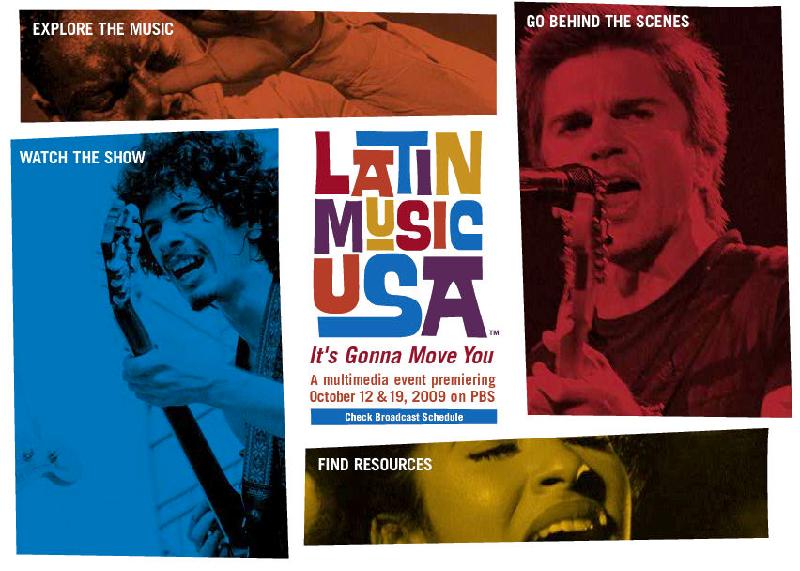
Latin Music USA is a film about American music. Fusions of Latin sounds with jazz, rock, country, rhythm and blues — music with deeper roots and broader reach than most people realize. It's a fresh take on our musical history, reaching across five decades and across musical genres to portray the rich mix of sounds created by Latinos and embraced by all. The four-hour documentary series premieres on October 12th (Episodes 1&2) and October 19th (Episodes 3&4) 2009, on PBS stations nationwide and on PBS.org/latinmusicusa. Produced by a team led by WGBH, in co-production with the BBC, Latin Music USA invites the audience into the vibrant musical conversation between Latinos and non-Latinos that has helped shape the history of popular music in the United States. Fittingly, the series launches in Hispanic Heritage Month, a time to recognize the contributions of Latinos to the United States and to celebrate Latino heritage and culture. The series features the stories of an extraordinary range of artists, including salsa great Willie Colón; the Latin-inflected sounds found in much of sixties rock and roll, from the Drifters to Motown to the Rolling Stones; jazz fused with Cuban rhythms from Mario Bauzá and Chano Pozo; the genius of Texas accordion player Flaco Jiménez; Carlos Santana; Linda Ronstadt; the legendary Chicano rock band Los Lobos; megastars Gloria and Emilio Estefan; Ricky Martin and Juanes; Miami rapper Pitbull; reggaetón performers Daddy Yankee and Tego Calderón; and Lin-Manuel Miranda from the Tony Award-winning musical In the Heights. The life experiences of these and many other unforgettable artists will reveal how Latinos have reinvented their music in the United States, while never losing sight of their own rich traditions.

9.19.2009

3 políticos del Pacífico van a la cárcel por parapolítica

3 Pacific coast politicians are going to jail for alleged collaboration with the paramilitaries. Good riddance to bad rubbish, although the problem is so deeply ingrained in the political system there (what with the deep penetration of armed actors and drug traffickers and the profoundly cynical political corruption in the region ...) that the detainment of these 3 in particular will do little to extirpate the roots. It should be noted that all three are affiliated with political parties supporting president Álvaro Uribe.

Los salpicados son:

9.09.2009

THE 2ND INTER-ASIA POPULAR MUSIC STUDIES CONFERENCE 2010 IN HONG KONG: CALL FOR PAPERS

DATE: June 22 (Tues) - 23 (Wed), 2010

VENUE: NAH 208, Humanities Bldg

New Asia College The Chinese University of Hong Kong, Shatin, N.T., Hong Kong (http://mmlab.itsc.cuhk.edu.hk/CMT/CM.aspx?lang=e&bldgId=119).

* About the campus map, transportation and shuttle bus, see below:http://www.cuhk.edu.hk/v6/en/campus_map/campus_map.html.

http://mmlab.itsc.cuhk.edu.hk/CMT/T.aspx?lang=e

http://mmlab.itsc.cuhk.edu.hk/CMT/SBS.aspx?lang=e


ORGANIZED BY:

Inter-Asia Popular Music Studies Group (http://interasiapop.org/)

School of Journalism and Communication, The Chinese University of Hong Kong

Institute for East Asian Studies, Sungkonghoe University


CONFERENCE THEME:

Genres of Popular Music in Asia


KEY NOTE SPEAKER

Motti Regev (The Open University of Israel)


STATEMENT:

We are pleased to announce the 2nd Inter-Asia Popular Music Conference in Hong Kong in collaboration with School of Journalism and Communication in the Chinese University of Hong Kong at 22-23 June 2010. After having the first conference at Osaka in 2008, we move forward to having the next one at Hong Kong, the birthplace of one of the most popular and most globalized sounds of Asia: Cantopop.

The studies on Asian popular music are still in its embryonic stage. There is no institution devoted to popular music studies within Asian universities, neither is there is a journal which specializes on Asian popular music. What we have now is an online based, transnational research portal, Inter-Asia Popular Music Studies Group in 2007 plus a rapidly growing research network that at the moment includes 80 scholars not only in Asia but also in Europe, America and Oceania. Although the organization has just taken its first steps, there is no doubt that the academic interest in Asia popular music is rising both inside and outside Asia. There is a growing feeling that Asian popular music has not received sufficient attention from international popular music studies and that the existing paradigms of popular music studies may not be that adequate for Asian popular music. This conference will be the unique event to engage with all the scholarly debates surrounding the emerging field of of Inter-Asia popular music studies.

The 2nd conference has a main theme entitled ‘Genres of Popular Music in Asia’. The 2nd IAPMS Conference will focus on different genres of Asian popular music. The central theme is on the emerging specific Asian music genres as a consequence of globalization/inter-Asian cultural flow/hybridization between indigenous and global culture. Rather than just introducing different kinds of music genres in Asia (melody, lyrics, etc), the paper submitted should focus on how these musical genres intersect/ engage with different social, cultural and political arenas. Genres of Asian popular music can cover pop, rock, hip-hop, reggae and any other traditional musical expressions in Asia. But we welcome any paper if it seriously studies Asian popular music.


DEADLINES

30 November 2009: paper proposal

31 January 2010: acceptance of papers

31 March 2010: registration

31 May 2010: submission of full paper

22-23 June 2010: conference days


CALL FOR PAPERS

The organizers of Inter-Asia Popular Music Studies Conference 2010 in Hong Kong would like to invite paper presenters to send their abstracts (not more than 250 words) before 30 November, 2009 to;asianpopstudies@gmail.com

If you have any inquiries, please feel free ask asianpopstudies@gmail.com or to local host Anthony Fung anthonyfung@cuhk.edu.hk


REGISTRATION FEE

Waged members: 240 HK$ (=30 US$)

Unwaged members: 120 HK$ (=15 US$)


ORGANIZING COMMITTEE

Anthony FUNG (Chinese University, Hong Kong/China)

Angel Lin (City University of Hong Kong, Hong Kong/China)

Eric Ma (Professor, Chinese University, Hong Kong/China)

Philip Benson (The Hong Kong Institute of Education, Hong Kong/China)

Masashi Ogawa (The University of Hong Kong, Hong Kong/China)

You Fai CHOW (University of Amsterdam, the Netherlands)

Jeroen de Kloet (University of Amsterdam, the Netherlands)

Yoshitaka MORI (Tokyo University of the Arts, Japan)

Tunghung HO (Fu-jen University, Taiwan)

Kai Khiun LIEW (National University of Singapore, Singapore)

Viriya Sawnagchot (Wathansala Centre for Cultural Studies, Thailand)

Hyunjoon SHIN (Sungkonghoe University, Korea)

Jung-Yup LEE (University of Massachusetts Amherst, USA/Korea)


NOTES

1) Please use the specific form (download<http://interasiapop.org/wp-content/uploads/2009/09/iapms2010_paper_proposal.doc>) when you submit paper proposal, which is attched. If you organize panel with more than two people, just fill in ‘the panel title’ as well as paper title in the form (There is no need for further description about the panel).

2) English is the only language in the conference as there is no common language among Asian languages. Translation service can be provided only during questions and answers, if the presenters need it.

3) Please observe that this conference is deliberately scheduled right after the ACS Crossroads 2010 Conference in Hong Kong. For more information on that conference please go to http://www.crossroads2010.org/
.

9.05.2009

Notas Culturales!!!

http://www.facebook.com/l/;www.choco7dias.com
______________________________

Guayacán lanza disco en Quibdó

Este domingo 6 de septiembre, en Leños y Lagos desde las 3 p.m., el maestro Alexis Lozano lanza su nuevo trabajo musical que aparecerá en el mercado a fines de este mes.

Según las palabras del director de la Orquesta Guayacán y la de los salseros autorizados, esta vez la sacó del estadio. Es un trabajo sencillamente espectacular, manifestó un experto.

Alexis acaba de traer de Puerto Rico una voz para la orquesta que es todo un talento, de nombre Jhan Collazos, y además está preparando otra figura talentosa: es un muchacho nacido en Quibdó de nombre Win Perea. Es el as bajo la manga para futuras producciones.

Este domingo, en Leños y Lagos, Guayacán estrenará su tema que ya es éxito nacional promocionado en la voz de Jhan Collazos, además de otros clásicos de la orquesta para conservar la vigencia reciclados reprocesados.

La firma Músicos Independientes del Mundo, MIM, en cabeza del abogado y promotor musical Milvio Minotta garantiza un espectáculo con todas las de la ley, donde estarán también Jazz Band Chirimía, la mejor banda musical del Chocó, El Gordo Sabroso, Perea Flow y Alexis Play.

No se mueva de Quibdó, disfrute a Guayacán con lo mejor de su repertorio.

..............................

HOMENAJE A BARULE

La secretaria de cultura y turismo del Chocó, Gloria Asprilla Mosquera, se ha propuesto resaltar la importancia de ciertos lugares para muchos olvidades y convertirlos en sitios históricos del Chocó para el mundo.

Inició remodelando el Parque Reyes, en el corazón de Tadó, frente a su hermosa Catedral, hoy patrimonio cultural de la nación.

Ha gestionado el monumento en homenaje al Rey Barule y a la cimarrona Agustina, personajes con los que significamos el rompimiento de las cadenas esclavistas.

Este legendario Barule, en asocio con otros doscientos esclavizados en el año de 1728, tomó las armas contra sus opresores, los venció y se adueñó del territorio cimarrón.

La Negra Agustina, poseedora de una sin igual belleza, fue violada y azotada, y como respuesta a tantas arbirtrariedades se unió con otras esclavas abusadas y con hachas y machetes originaron un gran levantamiento.

También la Secretaria de Cultura y Turismo busca que el corregimiento de Carmelo sea incluido en la lista de patrimonio cultural de la humanidad, al igual que Santa María la Antigua del Darién, en su calidad de primera ciudad fundada por los europeos en tierra firme, Nóvita capital provincial del Chocó, Unión Panamericana (Raspadura) por su Santo Eccehomo y su antiguo canan. En Andagoya el encuentro de alabaos, gualies, levantamiento de tumbas y su real de minas.

La idea es impulsar en el Chocó un turismo donde el visitante disfrute no solo de las bellezas materiales sino también de los inmateriales, elevando así el nivel de vida de sus habitantes.

Gracias al gobernador del Chocó, Patrocinio Sánchez, por facilitar los recursos, al artista Misael Nery Perea por esculpir el monumento y a Aulio César Ledezma, alcalde de Tadó, por su respaldo en la realización de la obra.

9.04.2009


September 3, 2009
Issue No.1
LAUNCH OF WWW.AFROLATINOS.TV

"Afro-Latinos: The Untaught Story"
Official Website Release September 3, 2009


afrolatinos logo
New York / Bogota-on September 3, 2009, Executive Producer, Renzo Devia and Writer / Co-Producer Alicia Anabel Santos invite you to the website release for the documentary series Afro Latinos: La Historia Que Nunca Nos Contaron (Afro-Latinos: The Untaught Story), join us at www.Afrolatinos.tv and be the first to have a sneak peak of the documentary still in production and due to air in late 2010.

Afro-Latinos: The Untaught Story is a documentary television series independently produced by Creador Pictures, LLC. The film will be a seven part series covering segments such as: history, language, religion, food, identity, art, music and social issues.

Who are Afro-Latinos?

Afro-Latinos are the descendents of the enslaved Africans who were forcibly taken from their land and dispersed throughout Latin America.

There are an estimated 200 million Afro-descendants throughout Latin America; yet the majority, have no political or economic power. Afro-Latinos: The Untaught Story will take you on a journey to meet Afro-Latinos throughout Spanish and Portuguese speaking nations of Central and South America and the Caribbean. It is the story of a shared history not found in textbooks. This film gives a voice to communities who have been invisible until now.

Be the first to view the official website for Afro-Latino's: La Historia Que Nunca Nos Contaron. This site is the one stop shop for all information on Afro-Latinos in the Caribbean, Central and South America. Viewers will be able to live the producer's journeys through pictures and videos. There you can learn more about the history that was never taught and the people who live in these Afro-Latino communities.

Visit www.Afrolatinos.tv to download free screensavers with images shot during filming. Check out the trailer on the main page for an inside look at the television series. Visitors will also be able to download radio shows containing Afro-Latino tunes, Latin Reggae and African beats that have inspired Latin music. There are links to organizations for each country that inform communities where to go if they are discriminated against, as well as resources to encourage viewers to continue to investigate history and a collection of books the crew picked up during their travels.

About Creador Pictures.LLC

Creador Pictures is an independent production company based in Bogota, Colombia created by Renzo Devia. Renzo has over 14 years of experience producing television in the United States, developing English language programming for Latinos with shows like Urban Latino TV, American Latino (www.AmericanLatino.tv) and LatiNation (www.LatiNation.tv). Creador Pictures is his new venture where he plans to produce Latino-themed content for Latin America in Spanish.

About Alicia Anabel Santos

Alicia Anabel is a proud New York-born Dominicana who is passionate about writing works that empower and inspire women to find their voices, speak up and demand that they be respected. Founder of the New York City Latina Writers Group, Alicia's extensive writing experience includes hosting, writing scripts for, and serving as co-editor of Latina Source Podcast. She's worked for renowned magazines such as BusinessWeek, Glamour and Domino, but it was an article published in Urban Latino Magazine (www.urbanlatino.com), "Two Cultures Marching to One Drum," that gained the attention of Producer, Renzo Devia. He invited her to partner with him on a project that will change the way the world sees color and race relations in Latin America.

The Producers thoughts on the project:

Renzo: "I couldn't stop asking myself: Why did I not learn about this history? Why didn't I know-how large this population is? Why are there so many Latinos that negate their African roots, who aren't proud of where they come from?"

Alicia: "Renzo and I wanted to delve deeper into what it means for us to be Latino. We recognized that we might share a bloodline with Africa and that this idea is hard to accept for some. Our mission is to create awareness and be apart of a dialogue on Afro-Latino issues. Through Renzo's vision behind the lens and my words on the page, we hope to have created a project that will be everlasting."

This is the history of our ancestors and the descendents they left behind, who today live in hidden communities. These are the underprivileged, those with their rights violated, who are excluded from society. This is the story of those who are not seen or heard... these are the invisibles! On this journey Alicia and Renzo discovered that their history is more beautiful than they imagined. The documentary is filled with stories of strength, steel spirits, cultural preservation, faith, hope, love, gratitude, generosity, and kindness. The mission of the producers is to promote equality within Latin America and put an end to discrimination.

Visit us at: www.Afrolatinos.tv

Sincerely,
Creador Pictures, LLC


Press Contact:
info@creadorpictures.tv

Join our mailing list!


8.10.2009

Situación de los indígenas colombianos sigue grave/Colombian indigenous still in trouble

From/De El Pais.com (from Cali)

According to the UN:
  • 10,000 indigenous people have been displaced from their land in the first half of 2009
  • 69 have been killed by armed actors so far in 2009, double the figure for the same period in 2008
  • the Colombian armed forces have been using indigenous people in intelligence work, putting them at risk of reprisals from the armed actors
  • the armed actors continue using sexual violence, landmines, and child recruitment as instruments of the conflict
  • the indigenous population, 1% of the national population, comprises 12% of the population of displaced people
Esto según el ONU, que entre otras cosas ha pronunciado que:
  • durante el primer semestre de 2009 casi 10.000 indígenas han sido desplazados
  • la cifra de indígenas asesinados en lo que va de 2009 asciende a 69, el doble de la misma cifra para 2008
  • las fuerzas armadas de Colombia usa los indígenas para tareas de inteligencia, exponiendoles a las represalias de los actores armados ilegales (como parece haber pasado en Barbacoas, Nariño)
  • la violencia sexual, la utilización de minas y el reclutamiento de niños siguen siendo como instrumentos del conflicto
  • el 1% de la población nacional que es indígena figura como el 12% de los desplazados


7.23.2009

Minería ilegal, ambiente y sustento en el Valle

Los pueblos afros de río arriba en el Pacífico son zonas mineras pero también en lugares como el casco urbano de Buenaventura tienen mucha minería. Más de un@ que conozco sale al monte a minear después de un derrumbe, una nueva construcción o si está bastante pelado de plata. Que sea esa actividad parte de la informalidad no es tanto un problema - ya que la mayoría de la actividad económica ahí es informal también - pero la accidentalidad y los potenciales costos ambientalistas sí. Un interesante artículo en El País de Cali examina la polémica en el Valle, reconociendo de un 80% de la minería del departamento toma lugar sin controles (término que prefiero al más estigmatizante "ilegal.")

Biofuels and human rights in Colombia / Biocombustibles y DDHH en Colombia

Esto es del Centro Comunitario Latinoamericano y del Caribe, sobre el impacto de laagroindustria de biocombustibles en Colombia sobre poblaciones local y muchas veces afrocolombianas.

This from the Latin American and Caribbean Community Center, on the impact of agroindustrial biofuel crops in Colombia on local - frequently Afro-colombian - populations.

***

For 12 days the Latin American and Caribbean Community Center was part of an International fact-finding mission to 5 regions affected by biofuel crops in Colombia: oil palm and sugar cane.

The mission had as its objective to respond to the serious impact of the expansion of biofuel crops in Colombia, especially as it relates to human rights violations. Some of the violations that were documented by the mission included environmental racism, violations around territorial and land tenure, attack on indigenous and African descendent sovereignty, and workers rights violations. The mission visited five areas that exemplified these areas.

Myself accompanied by representatives from Uruguay, Brazil, Indonesia, France, Mexico and Colombia were deployed to el Valle de Cauca. El Valle de Cauca is in the western side of the country, facing the Pacific Ocean, and it is considered one of the most important departments in the Republic of Colombia. Its capital is Santiago de Cali. Most of the residents reside in rural communities of this area, both in the lower as on the higher zones, but for the most part do not have enough land or do not have ownership of their land due to various rootless and violent processes that the communities have been subjected to.

This land that is continuously snatched and grabbed from peasant workers, indigenous and afro descendent communities, through violent systemic methods, has been overtaken by a government endorsed yet privatized sugar cane industry. Taking advantage of the extreme poverty of workers, families, indigenous and afro descendent communities the multi-million industry today fills the pockets of business owners, and ultra-right wing politicians through the massive exploitation of all human rights in this area.

The mission took place from the 1st until the 11th of July of the present year, and before the departure of its international delegates from Colombia, some preliminary conclusions and recommendations were presented to the public through a press conference and conference that delved into the social, economic and political implications of bio fuels and the sugar cane industry.

In the following weeks, we will be keeping you updated with findings from the different regions visited by the International fact-finding mission affected by biofuel crops in Colombia: oil palm and sugar cane. Including radio interviews, detailed reports, video and audio journals, and articles.

I urge you take a look at the following articles and actions that the Center has compiled through organizations and magazines such as WOLA, AFRODEZ, NACLA, and IRC-Americas. If you would like to get tailored information on the biofuel and sugar cane exploitation in Colombia, please click here to join the LACCC working group.

This coming week, July 25th, we will be doing a Mission Report Back on Radio Diaspora. Please tune in to www.wrfg.org online or if you are in Atlanta, GA tune into 89.3 from 5:00pm-6:00pm EST for our English hour and from 6:00pm-7:00pm EST for our Spanish hour. Invited guests include members from Brazil, Mexico, Colombia, France and United States.

***

Por los pasados 12 días, el Centro Comunitario Latinoamericano y del Caribe fue parte de una Misión de verificación internacional para documentar 5 zonas afectadas por los monocultivos para la producción de agrocombustibles en Colombia: palma aceitera y caña.

Entre los objetivos de la misión estuvo el Verificar en el terreno los impactos causados por esta agroindustria sobre el medio ambiente y documentar las violaciones a los derechos humanos, los derechos económicos, sociales y culturales (DESC), los derechos étnicos y ambientales, así como la vulneración de la soberanía alimentaria de las comunidades afrocolombianas, campesinas y de los pueblos indígenas. La misión visito cinco zonas afectadas.

Fuimos acompañados através del Valle de Cauca por representantes de Uruguay, Brazil, Indonesia, Francia, México y Colombia. El Valle de Cauca esta en el área occidental del país, orientado hacia el océano pacifico, y es considerado uno de los departamentos mas importantes en el Estado Colombiano. Su capital el Santiago de Cali. La mayoría de sus residentes habitan en comunidades rurales, tanto en las zonas altas y bajas, pero por su mayoría no tienen suficiente tierras o sus derechos a tierras por procesos descarados de las cual han sido sometidos y sometidas.

Estas tierras son arrebatas continua y frecuentemente de trabajadores campesinos, las comunidades indígenas y afro descendiente, con métodos institucionales y sistémicos, hecho posible por una industria endosada con por gobierno Colombiano que beneficia a compañías privadas de la caña de azúcar. Aprovechándose de la pobreza extrema de trabajadores, familias, comunidades indígenas y afrodescendiente la industria multimillonaria llenan hoy los bolsillos de propietarios de negocio, y de políticos ultra-derechos a costillas de la explotación masiva y la violación de derechos humanos de las comunidades mas pobres del área.

La misión ocurrió del 1ero hasta el 11 de julio del año en curso, y antes de la salida de los y las delegadas internacionales de Colombia, algunas conclusiones preliminares y las recomendaciones fueron presentadas al público en una rueda de prensa. En las semanas siguientes, le mantendremos al día con resultados de las diversas regiones visitadas por la misión internacional afectada por las cosechas del combustible biológico Colombia: palma de aceite y caña de azúcar. Incluyendo entrevistas radiofónicas, informes detallados, vídeo y audio diarios, y artículos de prensa.

Les exhorto que echen una ojeada a los artículos y las acciones que el centro ha compilado a través de organizaciones y publicaciones tales como WOLA, AFRODEZ, NACLA, e IRC-Américas entre otros. Si usted quisiera conseguir mas información sobre el agrocombustible biológico y la explotación de la caña de azúcar en Colombia, unase al grupo de trabajo de LACCC.

Este sábado, 25 de julio, haremos un informe de la misión en la Radio Diáspora. Sintonícense a www.wrfg.org en línea o si usted está en Atlanta, a 89.3 FM de 5:00 pm-6: 00pm EST para nuestra hora en Ingles y del 6:00 pm-7: 00pm EST para nuestra hora en Español. Invitados incluyen a miembros de Brasil, México, Colombia, Francia y de los Estados Unidos.

CFP: Metal

Call for Papers
Heavy Metal: Controversies and Countercultures
Titus Hjelm, Keith Kahn-Harris & Mark LeVine (eds.)

During its forty years of existence heavy metal music has been one of the most controversial genres of popular music. Controversies surrounding alleged (and often documented) sexual promiscuity, occultism and Satanism, and subliminal messages inspiring suicide, have all made heavy metal a target of ‘moral panics’ over popular culture. Within the broad category of ‘heavy metal’ new subgenres keep appearing, continuously challenging the more domesticated and mainstreamed versions, making the genre perpetually topical. In addition, with the deepening of globalisation, the music and culture of heavy metal has spread beyond Europe and North America, challenging cultural norms and raising public debates in new social contexts. Although commercially marginal compared to the heyday of its success in the 1980s, the social impact of heavy metal has hardly lessened.

The aim of this anthology is to analyse the relationship between heavy metal and society within a global context. Adopting a broadly social constructionist approach to the study of moral panics and social movements, the book examines two main themes:

a) Social reactions to heavy metal (i.e. controversy)
b) The construction of heavy metal culture and community in light of these controversies

The first theme looks at how heavy metal has been constructed as deviant and as a social problem. Studies that investigate representations of heavy metal in, for example, the media, the courts, religious literature, and other public arenas are welcomed. Because social problems and moral panics always reflect their social context, discussions of social interests and the social and cultural consequences of claims shed light on not just heavy metal as a genre and subculture, but society in a wider sense.

The second theme examines the construction of heavy metal from the ‘inside’, that is, how fans, musicians, music journalists, etc. create the culture of heavy metal and how that culture interacts with the surrounding social and cultural context. This could include ethnographical studies and studies of fan discourse, for example.

While the majority of chapters will be expected to have a sociological or a cultural studies approach, we welcome contributions from a variety of disciplines, including social psychology, anthropology, history, folkloristics, religious studies, gender studies, etc. Contributions that combine aesthetic/musicological analysis with a discussion of the music's social impact, or that explore how new technologies for production and distribution of music have impacted metal culture are also welcome.

Examples of possible chapters include:

· Heavy Metal and the Threat to Public Order in the Muslim World
· Autobiography and the Making of Heavy Metal Legends
· From National Shame to National Heroes: Lordi and the 2006 Eurovision Contest
· Christian Metal
· Heavy Metal in the US courts
· The Nordic Black Metal Phenomenon

Potential submissions could also include case studies of moral panics over heavy metal, ethnographic studies of heavy metal communities, and studies of fan and artist discourse. We are particularly interested in submissions that discuss heavy metal and society in the Middle East, Asia, South America, East Europe and Russia.

Please submit an abstract of up to 250 words and a short biographical note (see below) to t.hjelm@ssees.ucl.ac.uk<
mailto:t.hjelm@ssees.ucl.ac.uk>

The deadline for submissions is 30 September 2009.

The Editors:

Titus Hjelm is Lecturer in Finnish Society and Culture at University College London. His main areas of expertise are cultural sociology, sociology of religion, social problems, media and popular culture. He is currently working on a book on social constructionism (Palgrave Macmillan, 2010) and editing a volume titled Religion and Social Problems (Routledge, 2009). He is also a member of the internationally acclaimed metal band Thunderstone.

Keith Kahn-Harris is a research associate at the Centre for Urban and Community Research, Goldsmiths College. He is the author of Extreme Metal: Music and Culture on the Edge (Berg, 2006) and writes the blog Metal Jew (www.metaljew.org<http://www.metaljew.org>). He is currently co-writing a book on the British Jewish community since 1990.

Mark LeVine is Professor of modern Middle Eastern history, culture and Islamic studies at University of California Irvine and author and editor of several books, including Heavy Metal Islam: Rock, Resistance, and the Struggle for the Soul of Islam (Random House/Three Rivers Press, 2008 and Impossible Peace: Israel/Palestine Since 1989 (Zed Books, 2009).

Marimbas en Bogotá

VIII FESTIVAL COLOMBIA AL PARQUE
Y
FACULTAD DE ARTES - ASAB DE LA UNIVERSIDAD DISTRITAL FRANCISCO JOSÉ DE CALDAS
INVITAN
LA MARIMBA: HOMENAJE AL PACÍFICO COLOMBIANO
Componente académico:
Encuentro didáctico de marimberos y taller de creación: "La marimba y sus sones"
Talleristas:
Hugo Candelario Gonzalez - Guapi
José Antonio Torres "Gualajo" - Guapi
Baudilio Cuama - Buenaventura
Grupo Na´rimbo - México
28 al 31 de Julio
Facultad de Artes - ASAB. Cra. 13 No. 14 - 69. Bogotá.
Datos: Nombre completo, identificación, teléfono de contacto, pequeña reseña.
Cupo limitado. Se confirmará la inscripción.

Musicology gig in Holland

The Department of Art, Culture and Society at the University of Groningen, the Netherlands seeks a three month popular music teaching replacement for a short-term research sabbatical. The position would begin in April 2010 and last until the end of June 2010. The three courses given during this period include: History of American Popular Music, Popular Music Research Methodologies and Theories, and European Popular Music in Cultural Context. All courses have prepared syllabi, research materials, textbooks, articles, PowerPoint's and exams. The position pays ca. 6000 euros after taxes. One course is taught in English and the other two can be taught in English or Dutch. Two courses meet once per week and the other meets twice per week.
Interested candidates should either have a Ph.D. in ethnomusicology, musicology or cultural studies with an emphasis upon popular music or should be in their final stages of dissertation writing. Interested candidates should contact Kristin McGee at kamcgee32@yahoo.com.

Rolos marimberos

Un nuevo grupo musical bogotano de la línea de fusión de Curupira, Mojarra Eléctrica, La Revuelta, Tumbacatre estrena el viernes.

El nuevo grupo de marimba de chonta urbana CHIGUALITO
Junto a la conocida banda LA REVUELTA

Viernes 24 de julio
10:00 Pm
$10.000 incluye CD Chigualito!!!
Casa de Citas. Cra 3 No. 13-35

7.03.2009

La prensa chocoana reaciona a la muerte del Brujo

ACTUALIZACIÓN: Aquí está el artículo de Chocó 7 días.

Recuerdos de ‘El Brujo’

En la tarde del viernes 26 de junio, con un sol amarillento y picante, nos sorprendió la noticia del fallecimiento de Alfonso Córdoba ‘El Brujo’. Y esa noche fresca con un leve rocío y sin estrellas, lo velamos al son de guitarras, bombos, clarinetes y platillos. Los cantantes interpretaron sus composiciones más conocidas y cuando cesaban los instrumentos, la sala se llenaba con la sonoridad de su canto. Era como si estuviera ahí en vivo con nosotros, con sus gestos y bigotes desparramados, que parecían cubrirle todo el rostro. Doña Eunices Valencia (Niche), su esposa y compañera por más de 45 años, nos sobresaltó con un grito desgarrador cuando escuchó la voz de ‘El Brujo’ por los parlantes y luego se quedó con la mirada perdida en la añoranza y la nostalgia.

Sus hijos regados por todo el país no pudieron llegar a tiempo y hubo que hacer una segunda velación. La sala estaba a reventar con cultores, simpatizantes y admiradores y la noche presagiaba una despedida inolvidable, pero cayó un diluvio que taponó las cañerías y convirtió las calles en ríos de aguas residuales. Nos refugiamos apretados en la sala y muchos tuvieron que soportar los truenos ensordecedores y los relámpagos a la intemperie. "El Brujo’ta bravo", dijo alguien y otros afirmaron. Seguro El Brujo estaba enojado, había manifestado muchas veces que estaba cansado de homenajes y pergaminos improductivos. Quería un aporte económico para terminar su casita en

la zona minera de Quibdó. Sabía que los homenajes después de la muerte solo son satisfacciones de los vivos.

Tenía 83 años y fue de todo artísticamente, desde constructor de disfraces e instrumentos musicales, hasta cantante, músico, gran orfebre y prolífico compositor. La orquesta Guayacán del maestro Alexis Lozano le grabó dos temas, entre ellos Son Cepillao y Yury Buenaventura grabó Nostalgia Africana, la que consideraba su mejor canción.

Acosado ya por los quebrantos de salud logró grabar entre la clínica y los estudios con el maestro Alexis Lozano, un CD de música autóctona del Chocó que no ha sido publicado. Él quería darle esa última satisfacción a sus amigos presintiendo tal vez la muerte cerca y por eso acosaba a Alexis para su lanzamiento.

‘El Brujo’ junto con otros músicos y el empresario Belisario Valencia fueron los artífices de Los negritos del ritmo, una de las mejores orquestas de Quibdó. Después hizo parte del grupo Raza, Los brujos del son, El brujo y su timba, y el grupo Africanto, entre otros. Compuso más de mil canciones que guardó con letras de molde en la gaveta de un escritorio improvisado.

El diario El Tiempo en su edición del 27 de junio publicó:

"A sus 82 años, Alfonso Córdoba se sabe de memoria canciones invaluables que pocos conocen, y que si no fuera por su legado, estarían a punto de desaparecer. Ha abordado la historia del Pacífico Chocoano desde la composición, la joyería, el diseño de disfraces, la talla de madera y la construcción de instrumentos musicales.

"Se hicieron populares su canto, su manera de moverse y esa risa entre macabra y gozosa que lanza en medio de dos estrofas, pues como lo afirma el mismo "quien hace música no puede ser una persona triste, porque la música es el aliento del ánima".

"En 1989 grabó el álbum ‘Los Brujos del Son’ en compañía del vocalista chocoano Napoleón Cossio. En 1998 grabó Nostalgia africana’ y en 2007, Guana Recors lanzó ‘El brujo y la familia Valdés’, una selección de temas de los más representativos compositores Chocoanos en la voz de Córdoba. Ha tenido éxitos en radio, como ‘Vano retorno’ y ‘Son cepillao’, grabados por la orquesta Guayacán y Yuri Buenaventura. Los músicos jóvenes también retoman sus canciones. ‘La Mojarra eléctrica’ interpreta ‘La pataleta’, fusionando ritmos del pacifico con rock".

Aunque Alfonso Córdoba ‘El Brujo’ ya había trabajado en una película en la que hizo el rol de precisamente un brujo ocasional, el gestor cultural Lucas Silva, hacía meses venía trabajando en un documental que hablaba sobre la vida y obra del maestro y también un disco en música tradicional.


Esto, por ejemplo, es del periódico semanal Siglo 21, de Quibdó. Hay muchas cosas en la edición de hoy de su periódico rival Chocó 7 días, pero como no han colocado en su página todavía, yo lo coloco después.


HOMENAJE POSTUMO A ALFONSO CORDOBA MOSQUERA


Escrito por Editor
Jueves, 02 de Julio de 2009 19:12


El pasado 26 de junio del 2009, a la edad de 83 años falleció en la ciudad de Quibdó, el gran cultor chocoano Alfonso Córdoba Mosquera, Uno de los mejores juglares que ha parido nuestra tierra chocoana. Hablar “del brujo”, como cariñosamente lo denominábamos todos los chocoanos, es referirnos a toda una leyenda viviente dedicado a la cultura afrocolombiana, desde la elaboración de unos aretes de oro en filigrana, como la construcción de un disfraz para las festividades de nuestro seráfico de Asís en el barrio la Yesquita federal, o la vocalización de un bolero en Tambodò acompañado por los negritos del ritmo. La sociedad cultural chocoana, se encuentra de luto, por haber perdido a uno de sus mejores valores culturales, el cual dedico casi toda su vida terrenal al engrandecimiento del nuestro folklor chocoano, desde sus años mozos en que aprendió a cantar y componer toda el encanto que tiene nuestra exótica música del pacifico colombiano, la cual fue luego exteriorizada con lujo detalles en las mejores tarimas musicales de nuestro país.

Hay que subrayar que el “brujo”, había nacido en la hidalga ciudad de Quibdó, en el año de 1926, descendiente de una familia de cultores autóctonos raizales de nuestra música chocoana, desde sus inicios como cantante y compositor, demostró tener unas cualidades innatas, inicialmente tuvo en paso fugaz en su ciudad natal., hasta que elevo anclas y zarpo para la caribeña ciudad de barranquilla, en donde permaneció por un largo periplo, en donde tuvo la oportunidad de conformar el grupo los “mayorales del ritmo” y de alternar con lo más granado de nuestra música tropical colombiana , actividad artística que alterno con la orfebrería.

Luego de su larga estadía en la puerta de oro de Colombia, regresa a su ciudad natal Quibdó, en donde hizo parte del glorioso grupo los “negritos del ritmo”, al lado de Santos Moreno, Eduardo Halaby Renteria (Q.E.P.D), Aulio Lozano Córdoba, entre otros, desde allí se erigió al estrellato, dando a conocer sus espectaculares composiciones y modo singular de interpretarlas.

Posterior a las diferentes giras por varias ciudades de Colombia, en donde dio a conocer su peculiar estilo de interpretar los diferentes ritos del pacifico, regresa a la ciudad que lo vio nacer y en compañía del músico Napoleón Cossío, graba el inolvidable álbum musical de nominado los “Brujos del son”, y con la orquesta madera de Colombia, Guayacán, graba los temas “vano recuerdo”. Son sepillao.

Al “el brujo”, hay que abonarle la gran revolución que este le dio, a géneros como el bolero, la guaracha, el chocoson y el saporrondon, en 1989 graba el tema “nostalgia africana”, y en el año 2007 grabo una recopilación de temas de autoría de varios compositores chocoanos en su espectacular voz , denominado; “el brujo y la familia Valdez”, “el brujo” durante su trayectoria artística, fue fundador de los siguientes grupos musicales: Los negritos del ritmo, El Brujo y su banda, los grupos Sukundún, Africanto, Raza, Los brujos del son y El brujo y su timba, etc.

En los estertores de su vida artística, gracias a la labor titánica del compañero y gestor cultural de la fundación San Francisco de Asís de Quibdó, Douglas Cejar Cañadas, este logro rescatarlo del anonimato en que lo tenían las autoridades culturales nacionales y regionales, logrando que se le rindieran unos justos homenajes a su vida artística muy prolífica por cierto en el Ministerio de la Cultura, en el festival Petronio Álvarez, se le otorgo el premio nacional de la joyería y la difusión de su vida y musical por el periódico el Tiempo de Bogotá, al momento de su deceso había grabado un CD, al lado del también músico chocoano Alexis lozano Murillo.

Se requiere que la labor cultural del “el brujo”, sea rescatada por nuestras autoridades culturales y no quede en los anaqueles del olvido, a objeto de que esta sirva de estimulo para las futuras generaciones de exponentes culturales del Chocó, paz en la tumba de este gran juglar.