"Dame dame dame, que te voy a dar ... una guayabita de mi guayabal."

1.25.2007

El Museuo Nacional de EE.UU. publicará CD de vallenato/Smithsonian Folkways records vallenato


Smithsonian Folkways, already has 10 CDs that include, in part or in their entirety, colombian music. There are even two that feature "currulao", ¡Arriba Suena Marimba! by Grupo Naidy (with liner notes by this humble servant) and one with some proceless old recordings of Afrrro-Pacific music by anthropologist Norman Whitten). They put out a CD of music from the Colombian plains region that got a Grammy nomination, and another production of the classic group of Atlantic coast gaita music - los Gaiteros de San Jacinto. Now, according to El Tiempo, it looks like they've got a vallenato CD in the pipeline.

All of this is great news for Colombian music - Smithsonian does meticulous recordings with notes by experts in the music. They also offer music and the liner notes for download on their website. I wonder how that kind of model would work in Colombia, where self-produced albums end up costing a lot of money just to print the CDs. Obviously, only the rich have computers there, but traditional music does sell to certain sectors of the rich and tech-savvy. Anyhow, sorry for the blatant plug, but it is after all a great resource...

Smithsonian Folkways, etiqueta del Museo Nacioanl de EE.UU. ya tiene publicados 10 CDs que incluyen, en parte o en su totalidad, las músicas colombianas, de los cuales hay uno de "currulao", ¡Arriba Suena Marimba! del Grupo Naidy (con notas de este servidor), uno con viejísimas grabaciones del Pacífico (por el antropólogo Norman Whitten), un CD de música llanera que fue nominado por un Grammy hace unos años, y una producción de los viejos Gaiteros de San Jacinto. Ahora, parece que van a grabar vallenato, según El Tiempo.

Todo esto son muy buenas noticias para la música colombiana - el trabajo de Smithsonian es meticuloso y viene con notas de expertos explicando la música. Además, en la página de internet, uno puede bajar la música y las notas al computador sin tener que encontrar el CD (de pronto difícil desde Colombia.) Perdonenme que les hago la propaganda tan burdamente, pero es un recurso importante. Además, me parece un buen modelo para la publicación de música en Colombia, que, por ejemplo en el caso de la música de Pacífico, tiene la desventaja de siempre tener que contratar a una discotera para imprimir los discos, aunque obviamente solamente son los rico que tienen computadores...

1.24.2007

Hablando de guerra...

Según las estadísticas del periódico inglés The Economist, reportadas en El Tiempo, Colombia tiene un ejército más grande que él del Reino Unido y gasta un porcentaje más alto de su PIB en él que los EE.UU. Al menos, Colombia tiene la segunda más baja incidencia de divorcio en el mundo. ¿Será por la felicidad conyugal, el hecho que la mitad de las parejas colombianas viven en unión libre, religión católica, la válvula de escape del/de la moz@, o será porque semejante militarización deja tantas viudas que el divorcio ya no es ni necesario?

The most disgusting sound in the world/El sonido más asqueroso del mundo

Aparentemente, este es el sonido más asqueroso del mundo, según un estudio británico. Su teoría es que es un instinto evolucionario diseñado para evitar el contagio. Pero el sonido número dos no ocurre en la naturaleza, así que puede ser culturalmente determinado. Aquí, si el lector se quiere torturar más, están los dos sonidos feos empatados para el puesto número tres de sonidos más horribles del mundo: aquí y aquí. El primero de ellos tampoco parece natural (y de hecho tengo que confesar que a mí me gusta un poco), y el segundo debe inspirar simpatía más que horror, según la teoría evolucionaria...

Uno se pregunta si esta informacíon va a ser aplicado para usos militares del sonido, como en las "operaciones psicológicas" del asedio de Panamá en épocas de Noriega (mucho rock más o menos pesado, según la lista de canciones pedidas, tipo Black Sabbath y Twisted Sister, al lado de música navideña para el 25 de diciembre) del bunker del secto Branch Davidian, o del asedio de Fallujah en Iraq, en que los militares usaron la música más bullosa que fuera posible, y algunos sonidos feos como los del estudio. Cabe decir que la página web del estudio vende ringtones...

Apparently, this is the most disgusting sound in the world, according to a recent British study. Their theory is that its a reflex developed by evolution to avoid getting infected by diseases. Still, the second ugliest sound in the world doesn't occur in nature. If the gentle reader wishes to torture herself more, here are the two sounds tied for third ugliest - here and here. The first of these two doesn't seem natural either (and I have to confess that actually kinda like it) and teh second should inspire sympathy more than horror...

One wonders if this information is going to be applied for psy-ops military use, as in the seige of Panama en the Noriega days (lots of "hard rock" and classic rock of the era, according to the playlist, of the Black Sabbath, Twisted Sister, Doors type, plus Christmas music on December 25th), the Branch Davidian siege in Waco, or the battle of Fallujah, all of which involved the millitary using the loudest music possible, plus ugly sounds like the ones in the study. The study's website, incidentally, sells ringtones...

Que bonita bandera...

El Barrio (aka Spanish Harlem, East Harlem, Upper Yorkville, The Upper Upper East Side, SpaHa or whatever) is getting gentrified, says the Times. But the article doesn't say what others, like Arlene Dávila do - it's also being fractured by differences between Latinos, as Latino professionals and immigrants not from PR (Dominicans and Mexicans) move in, or what the whole thing has to do with the neoliberal playground city...

1.22.2007

RIAA reaches beyond mixtape DJs and downloading grandmas


Apparently, the RIAA is not only messing with mixtape DJs and downloading grandmas - they're also suing an online .mp3 distributor. For $1.65 trillion dollars!
Link

NY Times weighs in on mixtape Drama

Link

Puerto está que arde/Buenaventura is too hot

This article from El Tiempo is a pretty good summary of how fucked up it is. This one and this one talks about how the government wants to send in an elite antiterrorist squad in and put up surveillance cameras (no social investment for this impoverished city, of course.) I was in Buenaventura last week, and it is filled with paramilitaries (who supposedly demobilized but apparently have remobilized under new names, according to the graffitti sprayed all over the "para"-controlled neighborhoods), guerrillas (also apparent in graffitti), drug and their traffickers' private armies of assassins, and there is a huge military presence, with rather incongruous images like fully-armed military squadrons hanging their dirty laundry on lines stretched between their gigantic armored cars at the shantytown elementray schools they are camped out at as skinny black kids play in the mud nearby.

Buenaventura is a city of some 300,000 people, the most important port in the country (when the road to the interior isn't blacked by a mudslide, at least), located on the Pacific coast and home to mostly Afro-Colombians. The irony, of course, is that Buenaventura (or "Puerto," as many of its inhabitants jocularly call it) and the Pacific in general used to be one of the most laid-back parts of the country, and even if black migrants from the rural Pacific have been stifled in poverty. It also used to be a central cultural point, not only in local Afro-Colombian traditional culture, and for the Italian, Chinese, and Spanish immigrants who settled there, but for the entrance of salsa music in the mid-20th century with foreign black, which is how Cali became pachanguero. Contrast this bustling port with the funereal environment now, ehen people don't even want to leave their neighborhoods...

Este artículo de El Tiempo es un resumen de que tan caliente está. Este y este hablan del escuadrón élite antiterrorista que va a mandar el gobierno, junto con la instalación de cámeras escondidas (nada de inversión social en esta ciudad empobrecida.)Estuve en Buenaventura hace una semana, y puedo decir que está repleto de manes raros - paramilitares (supuestamente desmobilizados pero según el graffiti que he visto en varios barrios bajo su control, han remobilizado bajo otros nombres), guerrilleros (también haciendo presencia en graffitti, obviamente en otros barrios), narcos y sus ejércitos de sicarios, y hay una presencia militar muy grande, dejando imágenes incóngruos como soldados con cascos y fusiles guindando su ropa entre sus gigantescos vehículos blindados en las escuelas de primaria de turgurio sonde están acampados, mientras unos flacos pelaítos juegan en el barro.

Buenaventura es una ciudad de unas 300,000 almas, el puerto más importante del pueblo (cuando un desliz no bloquea la carretera al interior), y una ciudad negra. La ironía es que Buenaventura ("Puerto," como le llaman sus inhabitantes) y el Pacífico en general eran una de las zonas más tranquilas del país, y una zona cultural de mucha importancia, no solamente para la cultura afrocolombiana tradicional, y para los inmigrantes italianos, chinos y españoles que llegaron ahí, sino para la entrada de la salsa al país en mediados del Siglo XX, que es como Cali llegó a ser pachanguero. Contrasta esa ciudad caluroso con este cementerio donde la gente ni siquiera quiere salir de sus barrios...

Music plagiarism

Columbia University has a great web-based resource for research on music copyright infringement cases here, dating back to the 19th century (the cases, not the website...) Link

1.21.2007

La guerra sigue en Puerto


Dos bombas en Barrio La Independencia matan a 6. Para los que no conocen a B/tura, La Independencia es un barrio residencial - lo cual no quiere decir que no es escenario de la guerra. El País dice que "en lo que va corrido del 2007, se han registrado nueve muertes violentas en Buenaventura. El año pasado 400 personas perdieron la vida en este convulsionado municipio." O sea, 24 veces más que la cifra en Nueva York.
Leé los detalles aquí y aquí.

1.20.2007

History Repeats Itself: How The RIAA Is Like 17th Century French Button-Makers

This from "Mike" at TechDirt.com.

from the no,-seriously... dept

As regular readers know, I've been working through a series of posts on how economics works when scarcity is removed from some areas. I took a bit of a break over the holidays to catch up on some reading, and to do some further thinking on the subject (along with some interesting discussions with people about the topic). One of the books I picked up was one that I haven't read in well over a decade, but often recommend to others to read if they're interested in learning more about economics, but have no training at all in the subject. It's Robert L. Heilbroner's The Worldly Philosophers . Beyond giving readers a general overview of a variety of different economic theories, the book actually makes them all sound really interesting. It's a good book not necessarily because of the nitty gritty of economics (which it doesn't cover), but because it makes economics interesting, and gives people a good basis to then dig into actual economic theory and not find it boring and meaningless, but see it as a way to better understand what these "philosophers" were discussing.

Reading through an early chapter, though, it struck me how eerily a specific story Heilbroner told about France in 1666 matches up with what's happening today with the way the recording industry has reacted to innovations that have challenged their business models. Just two paragraphs highlight a couple of situations with striking similarities to the world today:

"The question has come up whether a guild master of the weaving industry should be allowed to try an innovation in his product. The verdict: 'If a cloth weaver intends to process a piece according to his own invention, he must not set it on the loom, but should obtain permission from the judges of the town to employ the number and length of threads that he desires, after the question has been considered by four of the oldest merchants and four of the oldest weavers of the guild.' One can imagine how many suggestions for change were tolerated.

Shortly after the matter of cloth weaving has been disposed of, the button makers guild raises a cry of outrage; the tailors are beginning to make buttons out of cloth, an unheard-of thing. The government, indignant that an innovation should threaten a settled industry, imposes a fine on the cloth-button makers. But the wardens of the button guild are not yet satisfied. They demand the right to search people's homes and wardrobes and fine and even arrest them on the streets if they are seen wearing these subversive goods."
Requiring permission to innovate? Feeling entitled to search others' property ? Getting the power to act like law enforcement in order to fine or arrest those who are taking part in activities that challenge your business model? Don't these all sound quite familiar? Centuries from now (hopefully much, much sooner), the actions of the RIAA, MPAA and others that match those of the weavers and button-makers of 17th century France will seem just as ridiculous.

Colombia

Two very different takes on the current state of Colombia, optimism from the Office of National Drug Control Policy printed in the Miami Herald here, a more sober look from NACLA, here.

More on the mix tape Drama/Más sobre el Drama del Mix Tape

More on the mix tape drama. Li'l Wayne is a punk - how could he take the RIAA's side against the same people whose mixtapes helped put him on the map? Or am I reading this wrong... Check it yourself. Link

Also check freethedjs.com.

Wayne and Wax

Sé que ya están enterado de Wayne Marshall y su análisis etnomusicológico de hip hop, ragga y reggaetón, y sé que ya están todos esperando la compilación Reading Reggaetón que el hombre está editando con Raquel Rivera y Deborah Pacini Hernández (autora del artículo seminal sobre la champeta en inglés en los años 90), pero les quería recordar de lo bacano que es su blog, Wayne and Wax. Es en inglés, pero tiene mucho video y cosas de interés. Chequeatelo aquí.

I know you already know about Wayne Marshall's ethnomusicological take on hip hop, dancehall reggae and reggaetón, and I know you're all waiting for Reading Reggaetón the volume he's editing with Raquel Rivera and Debora Pacini Hernández (who's wrote the seminal English-language champeta article in the mid-1990s) , but I just wanted to remind you all how good his blog, Wayne and Wax is. Check it here.

Trasvesti lider político del Polo/Transvestite a political leader


Link/Enlace

Foro sobre el rap afrocubano/Afro-Cuban Rap Forum

Cuba Represent!: Rap Music and Racial Politics in Contemporary Cuba

Rap music has become a vehicle by which Afro-Cuban youth voice demands for racial equality, negotiate with the state and promote alternative strategies for survival in contemporary Cuba. Sujatha Fernandes and Ariel “Asho” Fernandes, the renowned Cuban hip hop pioneer and entrepreneur, will explore the evolving relationship between rappers and the state and the growing importance of the hip hop movement to Cuba’s culture and heritage.

Sujatha Fernandes is Assistant Professor of Sociology at Queens College, City University of New York. She is the author of Cuba Represent! Cuban Arts, State Power, and the Making of New Revolutionary Cultures (Duke University Press, October 2006).

Moderator
Mauricio A. Font
Professor of sociology, The Graduate Center and Queens College

WHEN: February 2, 2007, 4:00- 6:00pm
WHERE: Rooms 9204-9205
The Graduate Center, City University of New York
365 Fifth Avenue (@34th St.)
New York, NY

Space is limited. Please send reservations as soon as possible to: cubaproject@gc.cuny.edu or 212.817.2099

For updates, visit www.bildner.org

Free Trade and Violence in the Afro-Colombian Norte del Cauca Region/Libre Comercio y Violencia en el Norte del Cauca Afrocolombiano

An interesting article linking free trade and violence in the Río Salvajina dam project in an Afro-Colombian region. Link

Artículo interesante (pero en inglés) sobre el vínculo entre neoliberalismo y violencia een el caso del proyecto de la represa del Río Salvajina en la zona afrocolombiana de Buenos Aires, Cauca. Enlace Copiá y cortá el texto a babelfish para traducirlo.

Community Radio in Colombia/Radio de Comunidad en Colombia

The radio programmes aim to generate public opinion in urban and rural areas on issues of concern for the communities, while encouraging citizen participation and strengthening democracy and coexistence. Link

Los programas pretenden generar opinión pública en zonas urbanas y rurales sobre asuntos de interés para las comunidades, y fomentar la participación ciudadana y el fortalecimiento de democracia y convivencia. Enlace

1.18.2007

1.02.2007

Blog reggaetonero

Another blog - Raquel Z. Rivera (of Puerto Ricans in the Hip Hop Zone fame) on reggaetón - here.

Blog bullerenguero

Un blog sobre gaita, bullerengue y músicas tradicionales del Caribe colombiano de un gran amigo, Edgard Benítez - enlace

12.31.2006

El pop colombiano actual

Claro que en este análisis del pop colombiano actual de El Tiempo, empiezan con Shakira y Juanes (zzzzz...) pero también mencionan a grupos como Chocquibtown y Mojarra Eléctrica. (Mencionan, no se profundizan mucho, pero bueno.) Enlace

12.29.2006

Buenaventura in AP/Buenaventura en prensa internacional


The Associated Press just ran a story on violence in Buenaventura. Note the typical tropes: the squlidness of children playing in the mud and the priest teaching (folkloric?) music to kids as an alternative to violence. Still, it's important that Buenaventura is on the radar.

La organización periodística mudial Associated Press acaba de distribuir un artículo (en inglés) sobre violencia en Puerto (Lleras, específicamente). Utiliza los tropos típicos para representarlo: los pelaos jugando en el barro y el sacerdote enseñándoles música (folklórica?) como alternativa a la violencia. De todas maneras, importante que Buenaventura esté en el radar.

12.23.2006

Por falta de dinero, colegio de Patía (Cauca) tiene una banda de tarros que toca reguetón y cumbia

... tal como parece, tocan "currulao" también. De hecho, parece que lo único que no tocan es la música tradicional de allá, los bambucos patianos, etc., tan historicamente importante para la zona del Patía y el país. Sé que la cotinianidad de la gente no siempre va a mantener los estilos viejos, y ahí no hay problema, pero la falta de apoyo del Estado no deja siquiera que el bambuco patiano sea digno de mencionar, y mucho menos de enseñar a los pelaos...

Forget rule of law, income distribution or social justice, turning guns into guitars will solve Colombia's violence

Link and another link
This iss typical cockamammy Colombian cultural policy. Prettify things, sweep the violence under the rug, ignore any practical solutions for addressing the violence, and expect this kind of hokey cheap symbolic peace PR to solve everything. Violence, I'm sorry, is a lot more deeply-rooted than a lack of guitars or a preponderence of guns, and this kind of thing, while it might seem innocuous, is actually harmful in the way that it disctracts people's attention from more fundamental ways of trying to address this situation. (Notice that the picture of the guy who invented the rifle-guitar is of a middle-class white guy, which is its own way of brushing inequality under the rug.) This is a very typical usage of music in Colombian cultural policy, as you'll all see in an article that will be coming out fairly soon in the Iberian Society for Ethnomusicology's journal TRANS. The sad part is that, according to the article, this is being taken up by the UN, whcih should know better. Of course, the status of the UN in Colombia is often up fpr grabs, President Uribe has made it difficult for them to work there, at least as far as human rights stuff goes, and there have been quite a few changes in leadership and personnel in the UN High Comission for Human Rights.

Obtuse definition "terrorism" makes asylum difficult for immigrants to get.

If you pay a ransom for a kidnapped family member or give food or medical treatment to a "terrorist group" ("The administration defines a terrorist organization as any group of two or more people, organized or not, that uses any device or weapon to cause injury to person or property") you are disqualified for asylum in the US, which, let's face it, is 1) hard enough to get as it is and 2) the fact that you were forced to aid one of these armed groups is probably one of the very reasons why you need to leave that situation. Buncha ignirant pig-headedness.
Link

12.21.2006

Malicia indígena

La Marina encontró un semisumergible usado para trasportar droga en una vereda de Buenaventura. Lástima no publicaron una foto - imaginate un semi-sumergible casero!

Link

12.20.2006

Boxeador colombiano una berraquera

Edison Miranda, un boxeador porteño, es rápido y agresivo, con unas manos poderosas por ser peso mediano. En su última pelea, le dio el man (Gibbs de Filadelfia) el noqout - en la primera ronda, y no por primera vez. Se están oyendo comparaciones con un Tyson de peso mediano. En este video, Mirando le rompe la quijada a su oponente (Abraham, un alemán) pero le robaron la merecida victoria en decisión. Tiene 27 victorias, 24 con noqout, y ahora una derrota.

Edison Miranda is a fast, aggressive boxer from Buenaventura with a powerful punch for a middleweight. His last fight, he knocked the poor guy out in Round 1, as he has done in the past. Middleweight Tyson comparisons have been made. This video is him up against this German guy - he broke the guy's jaw but was robbed the victory in decision. His record is like 27-1 with 24 KOs.

12.19.2006

Analysis of the Free Trade Agreement

The whole FTA between the US, Colombia and Peru, even though both Uribe and Bush managed to push it through (despite some pretty heavy opposition in Colombia) might be held up by the newly Democratic US Congress, meaning the whole bororó hasn't ended yet. This article has a good English-language analysis of the whole thing and why it's not a very good idea (among other thinghs, intellectual property of things from music to pharmaceuticals would end up being counted under US law, a system which serves corporate interests very well but is pretty closed to other conceptions or the ramifications of new information technology.)

Hard core right blog from the US discusses Colombia

Among other things, they talk about opposition to the proposed Free Trade Agreement as pro-FARC and Chávez's "Western Hemispheric Axis" and its desire to "divide Colombia." Interesting, though...

Link

12.18.2006

Música colombiana en NY/NY Colombian music

Hay cosas interesantes pasando en NY en estos días - Chonta Records ha organizado giras, está sacando grabaciones, y otras cosas interesantes y positivas con los varios grupos colombianos residentes en NY - chequeatelo acá.

Listen to a recent show by the group Coba here, starting more or less at 2:05:45.
Pillá un show reciente del grupo Coba acá, empezando más o menos en 2:05:45.

There's some pretty interesting stuff going on in the Big Apple these days - Chonta Records is booking tours, putting out records, and other interesting and positive things with the Colombian groups here in NY - check it out here.

Big scandal in Colombia

This is a pretty good article about the links between government institutions and the paramilitaries that re starting to come out. It would be difficult to overemphasize the importance of this, although nobody knows how far up to the top the evidence adn allegations could go - at any rate, it will probably seriously threaten future aid packages from the US...
Link

12.12.2006

Consolidación de los medios en Colombia

Enlace

Currulao en NY

Indigenous people map their territories with GPS and Google Earth/Indígenas mapeando sus territorios con GPS y Google Earth

Is there something wierd about this? I'm no Luddite but I can't quite put my finger on what seems wrong here... maybe having the indigenous acts as border patrol? Or maybe the whole idea of translating what they already know into terms that the rest of the world can understand and use - or abuse (it mentions biobiracy)?

Link

Hay algo raro aquí? No soy tan reaccionario pero hay algo aquí que me da vainita... de pronto que los indígenas actuén de patrulla fronteriza? O de pronto la misma idea de traducir lo que ellos ya saben a un medio que los blancos pueden entender y usar - o abusar (como la bio-piratería)?

Gaiteros de San Jacinto

Los herederos del sonido de Toño Fernández, Catalino Parra y los Lara reviven el folclor con el nuevo álbum 'Tributo a los hermanos Lara'.

Link

Plata para Cartagena


La finalidad es blindar el 'Corralito de Piedra' de basuras, vendedores ambulantes, indigentes, prostitutas, raponeros y el desorden vehicular.


Link

How the Music Industry Works These Days

12.10.2006

First Afrocolombian general/Primer general afrocolombiano

Link (English)
Enlace (Español)

Paramilitary, parastate? Paramilitar, paraestado?

The Colombian state is consumed in a scandal that is splashing even the President's feet about politicians and members of major state institutions being in bed with the paramilitaries. How come none of this stuff is in the NY Times these days? I know that Juan Forero, who was the Times correspondent based in Bogotá, went to the Washington Post, but still...

Link

12.03.2006

Xavante ringtone


The Xavante indigenous group of Brazil has stated selling traditional songs as ringtones, for lack of other economic possibilities. The point is not the "holy crap- the premodern and the postmodern!" or "the poor Indians are selling off their culture" or any of a number of other shocked responses. The interesting thing for me is that this example shows a delicate balance between respect for intellectual property (in this case, it would seem to be communal intellectual property) and the kind of file-share-friendly model of the Brazilian Ministry of Culture, headed by Gilberto Gil.
Here are the ring tones and cell phone wallpapers they are offering. There are also ring tones and wallpapers from a quilombola (Afro-Brazilian maroon/escaped slave) community here.

Los indígenas Xavante de Brasil están vendiendo cantos tradicionales como ringtones, por falta de otras posibilidades económicas. El punto no es "wow, los premoderno y los posmoderno, que cagada la globalización" o "pobre indios vendiendo su cultura" o otras respuestas sorprendidas o indignantes. Lo interesante de esto para mí es el delicado balance entre respeto a la propiedad intelectual (en este caso, p.i. comunal) y la noción de circulación abierta a través de la tecnología que ha propuesto el Ministerio de Cultura Brasileira, liderado por Gilberto Gil. Aquí están los ringtones y wallpapers de los Xavante. También hay una comunidad quilombola (afro-brasileira/palenquera) vendiendo ringtones y wall papers.

11.23.2006

TLC firmado/Free Trade Agreement signed

Today the Free Trade Agreement between Colombia and the US was signed, after months of tortured negotiations, vehement protests and their brutal suppression.

BBC article
Artículo El Tiempo

Hoy se firmó el TLC entre Colombia y EE.UU, después de meses de negociaciones y protestas.

Islamic ringtones

http://www.cbsnews.com/stories/2006/11/22/world/main2205417.shtml

Music or chant? Piousness or profanity? Technology or nature?

Música o rezo? Piedad o profanidad? Tecnología o naturaleza?

Marimba antigua/Old marimba # 1


Este imagen es el más antiguo que tenemos de la marimba en Colombia. Es de Barbacoas, en lo que hoy es el Departamento de Nariño, un pueblo que en su tiempo era bastante importante para la extracción de oro. El imagen es de la Comisión Corográfica de mediados del Siglo XIX. Lo interesante aquí es que el marimbero es blanco o mestizo. Esto sugiere que la música de marimba, aunque indudablemente de orígen africano (historiador Germán Patiño la cree indígena), sufrió varios procesos de sincretización, y a lo mejor llegó a ser una música popular entre la población general de la zona, aunque puede ser que fue popular sobre todo entre las clases populares, los esclavizados, y los negros libres. Pronto, la marimba entre los indígenas Cayapa...

Ethnographers on the dark side/Etnógrafos del diablo

Estos manes hacen etnografías para las empresas. Así que, si no te funciona eso de la etnomusicología, hay otra posibilidad...

http://www.ethnographic-research.com/

These dudes do corporate ethnographies. So if this ethnomusicology thing doesn't work out for...

11.21.2006

culturebox

culturebox
Jay-Z Versus the Sample Troll
The shady one-man corporation that's destroying hip-hop.
By Tim Wu
Posted Thursday, Nov. 16, 2006, at 1:50 PM ET

Last week, a mysterious company, Bridgeport Music Inc., sued hip-hop mogul Jay-Z, accusing him of breaking the law when he recorded his 2003 single "Justify My Thug." The song is an obvious nod to Madonna's "Justify My Love," but she is not the plaintiff. Instead, Bridgep! ort is suing because Jay-Z did something that is normal in hip-hop: sampling. He took a few notes, looped them in the background, and produced the tune. Bridgeport claims to own those notes, and is demanding a fortune in damages and a permanent ban on the distribution of the song.

Bridgeport is an unwelcome addition to the music world: the "sample troll." Similar to its cousins the patent trolls, Bridgeport and companies like it hold portfolios of old rights (sometimes accumulated in dubious fashion) and use lawsuits to extort money from successful music artists for routine sampling, no matter how minimal or unnoticeable. The sample trolls have already leveraged their position into millions in settlements and court damages, but that's not the real problem. The trolls are turning copyright into the foe rather than the friend of musical innovation. They are bad for everyone in the industry—includin! g the major labels. The sample trolls need to be stopped, either by Co ngress or by court rulings that establish sampling as a boon, not a burden, to creativity.

Bridgeport is a one-man corporation formed in 1969 and owned by a former music producer named Armen Boladian. It has no employees and no reported assets other than copyrights. Technically, Bridgeport is a "catalog company." Most catalog companies are in the relatively quiet business of licensing rights for television commercials, cover songs, and selling sheet music to interested fans. But Bridgeport has figured out a far more lucrative business model—trolling for sampling cash.

George Clinton is otherwise known as the King of Interplanetary Funk and, along with the late Rick James, the world's most famous funk musician. In the 1970s, Boladian and Bridgeport managed to seize most of the copyrights to Clinton's songs. How exactly they did so is highly disputed. However, in at least a few cases, Boladian assigned the copyrights to Bridgeport by writing a contract and then f! aking Clinton's signature (as described here). As Clinton put it in this interview, "he just stole 'em."

Bridgeport, if a thief, stole the winning ticket. The Clinton sounds it acquired went on to be among the most widely sampled in the rap music of the 1980s and 1990s. Sampling is as elemental to the genre as beats, beefs, or bragging, and Clinton's sonic creations were a major part of Public Enemy's debut, and were also used heavily by N.W.A., Dr. Dre, Biggie Smalls, and other rap pioneers. Often the sampling is virtually impossible to detect—listen to this sample in this N.W.A song.*

The rise of rap presented a golden oppor tunity for Bridgeport. After years of demanding fees, in 2001, Bridgeport launched nearly 500 counts of copyright infringement against more than 800 artists and labels. The company, suing in Nashville, Tenn., located every sample of Clinton or other owned copyrights it could find. It took the legal position that any sampling of a sound recording, no matter how minimal or unnoticeable, is still a violation of federal law. Imagine that the copyright owner of The Lord of the Rings had sued every fantasy book or magazine that dared used the words elf, orc, or troll. That gives you an idea of the magnitude of Bridgeport's campaign.

Since 2001, Bridgeport's shotgun approach has led to many dismissals and settlements, but also two major victories. First, in 2005, Bridgeport convinced Nashville's federal appellate court to buy into its copyright theory. In that case, Bridgeport Music v. Dimension Films, the defendants samp! led a single chord from the George Clinton tune "Get Off Your Ass and Jam," changed the pitch, and looped the sound in the background. (The result is almost completely unrecognizable—you can listen to it here). The Sixth Circuit created a rule: that any sampling, no matter how minimal or undetectable, is a copyright infringement. Said the court in Bridgeport, "Get a license or do not sample. We do not see this as stifling creativity in any significant way."

Then, in March of this year, Bridgeport cashed in. It convinced a court to enjoin the sales of the best-selling Notorious B.I.G. album Ready to Die for illegal sampling. A jury awarded Bridgeport more than $4 million in damages.

These troll lawsuits may sound unattractive. But is Bridgeport perhaps serving the goals of copyright—foste! ring creativity—in some less obvious way? One idea is that Bridgepor t is more Robin Hood than troll, stealing from lazy, rich rappers like Jay-Z to channel money back to deserving artists like George Clinton. That argument would make some sense if making rap music were easy, or if Clinton or other artists were in some way the beneficiary of the lawsuits. But neither is true. Bridgeport and other trolls do take from the rich. But they keep the money.

If the benefits are abstract, the costs imposed are obvious. Sample trolls have already changed the face of hip-hop. Early rap, like Public Enemy, combined and mixed thousands of sounds in a single album. That makes sense musically, but it doesn't make sense legally. Thousands or even hundreds of samples, under the Bridgeport theory, mean thousands of copyright clearances and licenses. Today, Public Enemy's breakout album, It Takes a Nation of Millions to Hold Us Back, would cost millions to produce or, more likely, would never have been made at all.*

The kicker is that while sample trolls are bad for artists, they're also bad for mainstream record labels. Record labels want to get out new music at minimum cost. But if clearing rights in the Bridgeport world costs a fortune, production becomes that much more expensive, and innovative music that much riskier a bet.

What, if anything, can be done? In the big picture, copyright must continually work to ensure that the basic building blocks of creativity are available to artists and creators, especially as new forms of art emerge. We already know what this means for novelists: freedom to use facts, borrow stock characters (like Falstaff) and standard plots (the murder mystery). For filmmakers, it means the freedom to copy standard shots (like The Magnificent Seven's "establishment shot"). For rap music, it means the freedom to sample. Rap's constant reinvention and remixing of old sounds makes it what i! t is; now is the time for the copyright system to get that. Vibrant cu ltures borrow, remix and recast. Static cultures die.

Legal solutions to the sample-troll problem are relatively easy—much easier than fixing the patent-troll problem. First, there's only one appellate court, the 6th Circuit, that takes the ridiculous position that any sample, no matter how minimal, needs a license. Most copyright scholars think the decision is both activist and bogus—in the words of leading commentator William Patry, "Bridgeport is policy making wrapped up in a truncated view of law and economics." Other courts can easily counter Bridgeport. They just need to say that the infringement rules for sampling are the same rules that apply for the rest of copyright. Dumbledore may resemble Gandalf, but he's no infringement. Similarly, if you can't even recognize the original in a sample, it shouldn't violate federal law to use it.

Congress could also easily ! act against the sample trolls. All that is needed is a "sampling code": a single section of the law that declares the usage of some fixed amount of a sound recording, say, seven notes or less, to be no infringement of the copyright law. That would give artists a simple rule to live by, while still requiring licenses for big samples that would compete with the original. It's a win-win scenario. With a single line of code, Congress can make this problem go away.

In the end, it's probably wrong to suggest the sample trolls are evil or hate rap music. The trolls simply look for profit, like any business, and are rational and predictable, like the mold that grows on rotten meat. None of these problems would be quite so severe if artists actually controlled their own copyrights. George Clinton's copyrights end up blocking sampling, when he himself favors sampling. "When hip-hop came out," said Clinton in this interview with Rick Karr, "I was glad to hear it, especially when it was our songs—it was a way to get back on the radio."

Copyright is supposed to be the servant of artists, but today that is all too often just a pretense. The vast majority of the nation's valuable copyrights are owned not by creators, but by stockpilers of one kind or another, and Bridgeport is just a particularly pernicious example. We need better devices to keep the control of the most valuable of artist's rights with artists. For, to paraphrase Judge Learned Hand, copyright was born to protect and liberate musicians, but it all too often ends up enslaving them.

Click here to see the complaint in the Jay-Z case.

Correction, Nov. 16, 2006: The article originally and incorrectly stated that It Takes a Nation of Millions to Hold Us Back was Public Enemy's first album. In fact, it ! was the group's second. (Return to the corrected sentence.)

Correction, Nov. 17, 2006: The article also originally misidentified a sample as from a Public Enemy song—it was from an N.W.A. song. (Return to the corrected sentence.)

Tim Wu is a professor at Columbia Law School and co-author of Who Controls the Internet?

Article URL: http://www.slate.com/id/2153961/

Copyright 2006 Washing tonpost.Newsweek Interactive Co. LLC

11.06.2006

Los colombianos ven a sus instituciones/Colombians take a look at their institutions


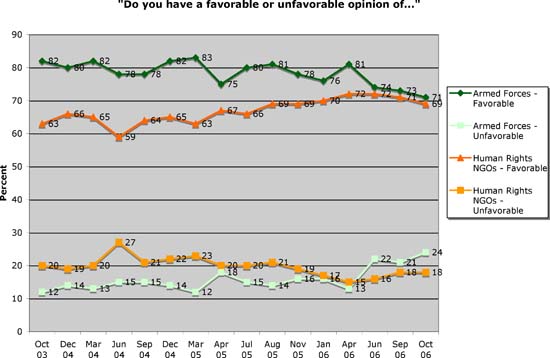
Según una reciente encuesta, en Semana, la popularidad de Uribe y las FF.AA. han caído mientras la de las ONGs de derechos humanos han subido, entre otros resultados. Una fotografía interesante de las actitudes de los colombianos. Véase también aqui.

According to a recent poll in Semana magazine, President Uribe's and the Armed Forces' popularity fell, while that of NGOs working with human rights rose, among other results. An interesting snapshot of the attitudes of Colombians. See here.


11.01.2006

Bishop of Buenaventura leaves under death threat/Obispo de Buenaventura se va del puerto por amenazas

Link/Enlace

Traditional medecine, bio-prospecting and intellectual property in Colombia/Medicina tradicional, bio-prospección y propiedad intelectual en Colombia

Link/Enlace

Para traducir, corta y pega a esta página: http://babelfish.altavista.com/

Movie workers on strike in Colombia/Huelga de trabajadores de película en Cartagena

Los albañiles del rodaje de "Amor en tiempos de cólera" en Cartagena están de huelga porque dizque les trata de "micos," "indios" e "ignorantes" y, es más, les quitan plata del cheque de manera sospechísima. Lo más sabroso de todo son, como siempre en ElTiempo.com , los comentarios de los lectores(oye, pero esos comentarios están rogando por una buena etnografía): "No les paren bolas esos costeños son perezosos."

Workers on the set in Cartagena of the film version of Gabriel García Márquez's "Love in Times of Cholera" are on strike because their employers call them "monkeys," "indians," and "ignorant," and, worse yet, make suspicious deductions from their paychecks. The best of all is the entertainingly obnoxious reader comments on ElTiempo.com (begging for an ethnography), like: "Don't worry, those people in the coast are lazy."

Punk rockers banned in Medellín/Punquetes "Odio a Botero" Prohibidos en Medellín

My favorite Colombian punk rock group was barred from (an then reinstated in) a punk festival in the city of Medellín because their name - Odio a Botero (I Hate Botero)
is offensive to the city where Fernando Botero, the famous painter of fatness (fat prists, fat kids, fat horses, fat fruit, fat houses, fat guitars) is from. Puh-leez, sometimes there's something very tetchy and kind of pathetic about Colombian - or is it just paisa? - nationalism.

A mi grupo punkero favorita de Colombia, Odio a Botero prohibieron, y despues permitieron su participación en festival del punk en Medellín por que a algunos paisitas no les gustó el nombrecito. Por Dios, a veces el nacionalismo Colombiano - o será nomás el paisa? - es un poco patético.

Antropólogo Clifford Geertz, 1926-2006

Eminent cultural anthropologist Clifford Geertz has died.

El eminente antropólogo Clifford Geertz ha muerto.

10.23.2006

Ethno conference in Peru/Conferencia etnomusicológica en el Perú

Welcome to Peru
To The International Symposium 2007
:

Unveiling Society’s Secrets: An In-Depth
Analysis of the Culture of the Americas


The International Symposium 2007, have the pleasure to salute you and invite you to participate in this important event that will take place in Miraflores, Lima, Peru, between the 14th to the 17th of February 2007. The new date of this Symposium includes paper presentation, invited speakers, and special discussion sessions.
The Graduate School of the Facultad de Letras y Ciencias
Humanas from the Universidad Nacional Mayor de San Marcos, as the organizing institution of the the Symposium, feels honoured of being able to receive Professors and Graduate students of the Américas and hopes to share four days of academic work and social encounter.

Keynote Address
by Dr. Ruth Shady, the World Famous Peruvian Archeologist who Discovered the Oldest City in the Americas: Caral, Peru

Keynote Speakers
Professor: Dr. Raul Romero. Ethnomusicology, Harvard University
Professor: Dr. Edyl Mego. Art. UNAM
Professor: Dr. Bartholomew C. Dean, Harvard University

Themes for the conference will focus primarily:
Andean Ethnomusicology
Peruvian pre-Hispanic Musical Instruments through Time
The oldest
civilization of America: Caral, Peru
Amazonia

CALL FOR PAPERS (Spanish or English)
Proposals on any other topics relevant to the following fields are also welcome.

  • Peruvian ethnomusicology.
  • Peruvian pre-Hispanic musical instruments.
  • Andean music ethnography
  • Social use of the musical instruments from the Pre- Inca to the Inca times.
  • Aesthetic valuation of the Peruvian pre-Hispanic musical instruments.
  • Synchronous Study and social use of the musical instruments from Pre-Inca to the Inca times.
  • Iconography in ceramic musical instruments of the pre-Columbian cultures.
  • Iconography on the centuries old music of the Peruvian Andes to contemporary times.
  • Andean popular dances.
  • Caral Supe.
  • Social anthropology, critical theory, kinship, politics, exchange, symbolic forms, social change/ development and human rights in Peruvian Amazonia.(Loreto/San Martin)
  • Rights, power and cultural survival in Indigenous Amazonia..
  • Amazonian Peoples: Cultural, medical and tradition survival.
  • Kinship
  • The Urarina People of Upper Amazonia

Organizing Committee:
Dr. Marcos Matos, Dean of Facultad de Letras y Ciencias Humanas
Dr. Martha Irene Barriga Tello, Director of Post-Graduate School
of the Facultad de Letras y Ciencias Humanas
Lic. Esther Espinoza Espinoza, Professor Facultad de Letras y Ciencias Humanas

Scientific Committee:
Dr. Raúl Romero Cevallos
Dr. Edyl Mego Benites
Dr. Bartholomew C. Dean.
Composer Maestro Enrique Iturriaga, ex director of the UNMSM School of Art and the National Conservatory of Music. Emeritus Professor at both Institutions.
Composer Maestro Seiji Asato Asato, Professor of National Conservatory of Music.

Deadlines

  • The deadline for intent to participate is: November 30, 2006
  • The deadline for submission of abstracts is: December 15, 2006 (*)

(*) Please see special instructions under Abstracts

Abstracts are welcome for oral presentation (20 minutes + 10 minutes discussion). Please send 2 copies with your name and address via email to:

Dr. Marcos Goldfarb postgrado.symposium2007@yahoo.com
Dr. Martha Barriga Tello upg_l@hotmail.com

PLEASE NOTE: There is room for many individual proposals in special sessions, unrelated to the colloquia.

Organizing Institution:


Unidad de Post Grado de la Facultad de Letras y Ciencias Humanas
Avenida Dos de Mayo 536, Miraflores 19, Lima, Peru

Symposium Details and Registration Form

Please click on the appropriate link below, which will give you further details on the Symposium, registering and accommodation.
Both the registration form and accommodation detail are available for you to download.

http://www.inkanations.org/symposium_2007.html

Contact people:
Please feel free to communicate with Dr. Marcos Goldfarb if you are interested in submitting an abstract for our Symposium: “Unveiling Society’s Secrets: An In-Depth Analysis of the Culture of the Americas”.
I
f your research is not related to the general themes but you might be interested in presenting an abstract at this conference, definitely see the list of other POSSIBLE TOPICS being held at the Symposium.

Coordinator academic and administrative affairs:
Dra. Martha Barriga Tello: Director of Post-Graduate School
of the Facultad de Letras y Ciencias Humanas

e-mail:
martha_barriga@yahoo.com.ar

Coordinator:
Abstract information, Registration, Accomodation and Transport:
Dr. Marcos Goldfarb e-mail: inkanations@att.net and/or postgrado.symposium2007@yahoo.com

Universidad Nacional Mayor de San Marcos
The UNMSM has been recognized throughout its 450 years in Peruvian history as an innovative, public institution that prepares the future leaders of this country. It was founded in 1551 and it is the oldest university in the world and the oldest in America. It was chartered by a royal decree signed by Charles I of Spain. Over 50,000 students who have participated in an extremely competitive entrance exam attend the UNMSM to persue degrees in over 100 academic fields.

PLEASE NOTE:
Information on this website is preliminary, and is subject for change.
IT IS IMPORTANT THAT ALL CONFERENCE PARTICIPANTS INFORM THE LOCAL ORGANIZERS ABOUT THEIR ARRIVAL TIME AT LIMA INTERNATIONAL AIRPORT
.
We also encourage everyone to book their lodgings as early as possible.

Before or after the conference there are many possibilities for excursions and visits:
1) A three nights four days group excursion to Cusco and Machu Picchu
2) A two days one night group excursion to Nazca Lines.
3) Museo de Arqueologia y Antropologia de San Marcos: La Casona de San Marcos

Meetings are open to professor and graduate students from all parts of the world without restriction. We welcome proposals that should not exceed 20 minutes in duration, complete panels, including round table discussions.
Since this International Symposium focuses on discussion, we explicitly encourage participation even without formal presentation.

REGISTRATION FEES

Date: As soon as possible
Participants with or without Paper presentation: us$ 200.00
Accompanying persons: us$ 50.00
Faculty and students UNMSM: s/ 70.00 (Caral and Dinner show extra)
Faculty and students Universidades Nacionales del Peru: s/150.00 (Caral and Dinner show extra)
In case of non attendance, the Organizing Committee will not be able to return the Registration Fees paid.
Method of Payment: In order to avoid transfer charges in USA and Peru the Committee suggested to make an initial deposit us$50.00 dollars payable to:
Marcos Goldfarb, Account No..
93100022167
First Republic Bank

1200 Prospect St. La Jolla, California 92037
Balance to be paid by cash (dollars or soles) during Registration day to
Facultad de Letras y Ciencias Humanas UPG
.account.
Faculty and students from UNMSM and Peruvian universities may pay directly to:
Unidad de Post Grado de la Facultad de Letras y Ciencias Humanas

Avenida Dos de Mayo 536, Miraflores, Lima, Peru

10.19.2006

Música colombiana en Nueva York/Colombian Music in New York


Hay varios grupos colombianos buenos en NY - y van a tener su IV Encuentro el 12 de noviembre, el domingo.
There are a bunch of great bands in NY - and they're having their fourth annual Encuentro on November 12, Sunday!
The groups/Los grupos:

Folklore Urbano jazz fusion - you gotta hear they're cumbia version of Monk's "Well You Needn't"
Coba (not the Correction Officers' Benevolent Association but guitarist and arranger Sebastían Cruz's rock/jazz fusion project),
electro-folk chanteuse Lucía Pulido,
neo-traditional gaiteros La Cumbiamba Eneyé,
virtuoso harpist Edmar Castañeda,
the renowned Latin jazz pianist Hector Martignon
conguero Samuel Torres


Propiedad Intelectual y Música en Brasil/Intellectual Property and Music in Brazil

Desde que Gilberto Gil asumió el puesto de Ministerio de Cultura en Brasil, con una perspectiva bastante populista sobre el asunto de propiedad intelectual, las grandes empresas discográficas han estado por pelearselo. Ahora, parece que ya están sacando los machetes. La International Federation of the Phonographic Industry (IFPI) tuvo una reunión en Brasil y no dejó entrar unos profesores brasileiros. Mientras tanto, uno puede ver que los brasileiros comunes y corrientes no paran ni bolas a estas mega-empresas y ya tienen sus propias maneras de difundir y consumir su música, como muestra Hermano Vianna. De todas maneras, para los que quieren expresar a la IFPI su oposición a la restricción de la libre circulación de la cultura, hay una petición para firmar. Yo sí la firmé - me parece una ridiculez que los supuestos dueños de nuestra cultura van en contra del derecho de las personas de participar en lo que han creado.

Ever since Gilberto Gil took over as Brazilian Minister of Culture, with a populist perspective on the subject of intellectual property, the big record companies have been itching for a fight. Now they've fired a shot over the bow. The International Federation of the Phonographic Industry (IFPI) had some kind of meeting in Brazil and refused to allow some Brazilian professors to enter. Meanwhile, it's pretty esasy to see that regular Brazilians coulsn't give a rat's butt about these music mega-corporations and already have their own ways of distributing and consuming their music, as Hermano Vianna's excellent article shows us. At any ratem if you feel like you want to express to the IFPI that you're opposed to their restriction of the free circulation of culture, there's a petition you can sign. I did - it seems absurd that the supposed owners of our culture are going to oppose the right of people to participate in what they've created.

10.15.2006

Champeta

This gap-toothed little kid with gigantic sunglasses (the caption says, incongruously, "Shark Vision") gets down to some good old fashioned champeta.

Este pelaito chimuelo con sus gafotas "Shark Vision" sí tira paso de champeta!

Open letter on race, class and cultural policy/Carta abierta sobre clase, raza y política cultural


Esta carta es del colombiano Lucas Silva de Palenque Records, que promociona lo afrocolombiano en París. It complains about racism and classism in Colombian cultural policy.

This letter is from Lucas Silva, Colombian head of Palenque Records, which promotes afrocolombian stuff in Paris. Señala racismo y clasismo en la política cultural colombiana.

10.11.2006

San Pacho.com!

This might not be a big deal for those of you who are reading in English - here in the States, everybody and their grandmother has a website, but for the Chocó to have a presence on the web is a big deal. This site, www.sanpacho.com, is all about the biggest craziest party in the world, the San Pacho (Saint Francis's local nickname) festival in Colombia's black province of the Chocó. Go check it out, and then go to San Pacho next year.

Oye, pero aquí en EE.UU., todo el mundo y su abuela tiene una página internet, pero gran cosa que existe ahora www.sanpacho.com desde el Chocó para promocionar su gran rumbón. Ojalá algun día, el festival de música tradicional más importante que tiene Colombia, el Petronio Álvarez, se organice lo suficiente para montar una vaina de estas...

War and the female body in Colombia/Guerra y el cuerpo de la mujer en Colombia

An excellent, and very sad article.

Artículo excelente, y bastante triste.

Coca en el Pacífico caucano/Coca in the Pacific

Si alguien, a pesar del descubrimiento el año pasado que unos oficiales de la Marina estaban enviando drogas de la zona de Guapi-Timbiquí, no se ha enterado de lo que está pasando en la costa caucana, que hasta tiempos relativamente recientes estaba más o menos libre de los actores armados y el cultivo ilícito, ya estamos viendo su absorpción en la trágica situación colombiana. Ahora, incautaron materiales para el procesamiento de la coca en una lancha saliendo de Buenaventura rumbo a Timbiquí. Eso obviamente obstaculiza el trabajo de campo en la zona, pero hasta más preocupante es el efecto que la plata fácil y la inevitable militarización de la Marina y los otros actores, podrían tener para la gente y la cultura. Muy triste.

If last years' bust of the Navy sending drugs out of Guapi and Timbiquí didn't clue anyone in to what's going on in the Pacific coast of the department of Cauca (location of Guapi and Timbiquí), which until fairly recently was relatively free of armed actors or coca-growing, we're now seeing the absorption of this region into the tragic Colombian situation. Now, the government has seized a boat with coca-processing chemicals leaving Buenaventura for Timbiquí. This obviously effects fieldwork there, but even more worrisome is the effect that easy money and the inevitable militarization by the Navy and the other actors could have on the people and the culture of the zone. Very sad.

Comer en Nueva York sigue siendo más barato que en Tokio, Londres o París/It's cheaper to eat in New York than Tokyo, London or Paris

I don't know but 40 bucks a meal seems pretty expensive to me. I'm already tired of how expensive this city is - I've been in the city for a month and I've barely gone out at all. It may be cheaper than Tokyo, London or Paris, but jeez 5%?!

Yo no sé pero 40 chavos una comida me parece bastante caro. Ya estoy mamado de lo caro que es esta ciudad - llevo un mes aquí y casi no he salido casi nada. Puede ser que es más barata que Tokio, Londres o París, pero por Dios, 5% de aumento?!

Link/Enlace